
Narendra Pushkarinee Puri, also known as Narendra Pokhari, Narendra Tank or Chandana Pushkarini, is one of the most important sacred water bodies in Puri, Odisha. Located close to the famous Jagannath Temple, this historic tank is more than a peaceful place beside the water. It is closely connected with the religious traditions, festivals and cultural life of Puri.
The large tank is known for its central Chandana Mandapa, surrounding ghats and its special association with the Chandan Yatra of Lord Jagannath. During the festival, the sacred tank becomes the setting for traditional rituals and ceremonial boat rides, giving visitors a glimpse into one of Puri’s most distinctive religious traditions.
For travellers exploring the spiritual side of Puri, Narendra Pushkarinee offers a different experience from the city’s temples and beaches. Here, history, water, architecture and devotion come together in one remarkable place.
Narendra Pushkarinee Puri at a Glance
| Details | Information |
|---|---|
| Name | Narendra Pushkarinee |
| Also Known As | Narendra Pokhari, Narendra Tank, Narendra Sarovar, Chandana Pushkarini |
| Location | Puri, Odisha |
| Historical Period | 15th Century AD |
| Associated With | Lord Jagannath & Chandan Yatra |
| Main Attraction | Chandana Mandapa |
| Number of Ghats | 16 |
| Entry Fee | No Entry Fee |
| Best Time to Visit | Early Morning & Evening |
| Best Experience | Chandan Yatra & Festival Period |
| Nearest Major Landmark | Jagannath Temple, Puri |
Timings can vary according to local arrangements and religious activities. Commonly listed visitor hours are around 6:00 AM to 8:00 PM, while other current listings give slightly different closing times. If you are visiting specifically for a ritual or festival, it is best to confirm the day’s local schedule.
Why Is Narendra Pushkarinee Famous?
Narendra Pushkarinee is famous primarily because of its deep connection with the Chandan Yatra, an important festival associated with Lord Jagannath.
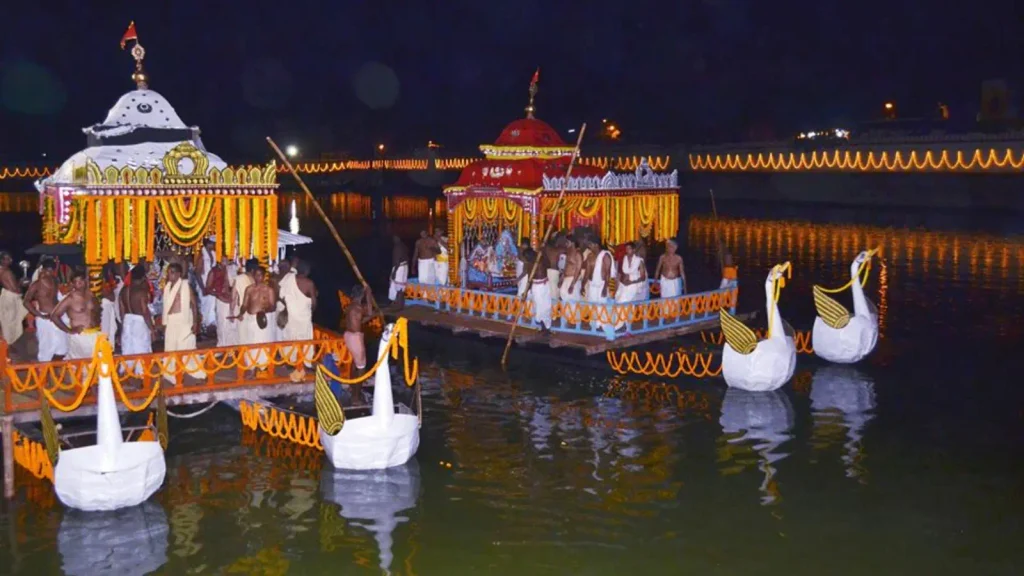
The tank is not simply a historic pond. Its waters, ghats and central shrine form part of Puri’s living religious landscape. During Chandan Yatra, deities are ceremonially brought to Narendra Pushkarinee, sandalwood paste is associated with the rituals, and decorated boats are used for the traditional Chapa Khela.
The central Chandana Mandapa adds another distinctive feature to the tank. Standing on an island surrounded by water and linked by a bridge, it creates one of the most recognizable views of Narendra Pushkarinee.
History of Narendra Pushkarinee
The history of Narendra Pushkarinee goes back to the 15th century AD. The tank is traditionally associated with Narendra Deva, who belonged to the ruling period of Gajapati Kapilendra Deva.
Its historical importance grew alongside Puri’s religious traditions. The tank became closely associated with the rituals connected with Lord Jagannath and eventually became an important setting for Chandan Yatra.
The name Narendra Pushkarinee comes from its historical association with Narendra Deva, while the name Chandana Pushkarini reflects its connection with the Chandan Yatra.
Over the centuries, the tank has remained an important part of Puri’s sacred geography. Unlike a monument that can be viewed only from outside, Narendra Pushkarinee continues to be connected with religious practices and annual celebrations.
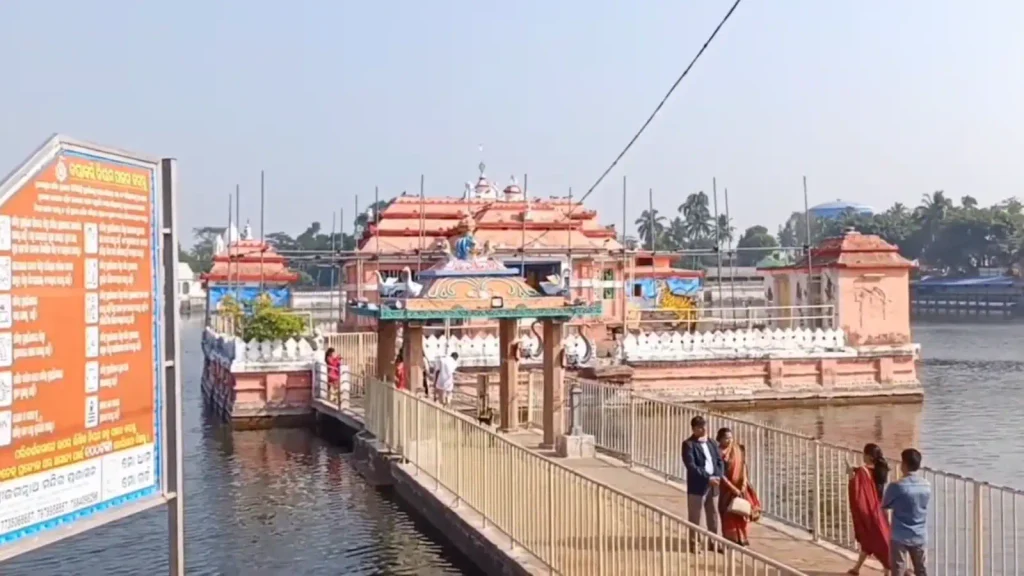
Chandana Mandapa: The Temple in the Middle of the Tank
One of the most distinctive features of Narendra Pushkarinee is the small temple-like structure known as Chandana Mandapa.
It stands on an island in the middle of the tank and is connected to the southern side by a bridge. The combination of the island, water, bridge and surrounding ghats gives Narendra Pushkarinee its unique appearance.
The mandapa becomes particularly important during Chandan Yatra when religious activities associated with the festival take place around the tank.
For visitors, the central structure is also one of the best features to observe while walking around the ghats. It gives the entire tank a sense of symmetry and makes the site different from an ordinary water reservoir.
The 16 Ghats of Narendra Pushkarinee
Another interesting feature of Narendra Pushkarinee is its series of 16 ghats surrounding the tank.
These ghats provide access to the water and have traditionally served religious and ceremonial purposes. The main ghat is especially notable for its stone steps.
The use of Khondalite stone in the main ghat reflects the historic architectural character associated with Odisha. The water level is considerably below the surrounding road level, making the descending steps an important visual feature of the tank.
When visiting, take care while walking down the steps, particularly after rain, because stone surfaces near water can become slippery.
Narendra Pushkarinee and Chandan Yatra
The strongest reason for Narendra Pushkarinee’s religious importance is its association with Chandan Yatra.
Chandan Yatra is traditionally celebrated for 21 days and is connected with the summer period in the Jagannath tradition. During the festival, the deities are taken in ceremonial processions to Narendra Pushkarinee.
One of the most visually distinctive traditions is Chapa Khela, the ceremonial boat ride on the sacred tank.
Decorated boats move across the water while devotees gather around the ghats to witness the celebrations. The atmosphere becomes especially vibrant during the festival, transforming the normally peaceful tank into an important centre of religious activity.
Religious Significance of Narendra Pushkarinee
Narendra Pushkarinee holds an important place in the spiritual landscape of Puri because of its connection with the traditions of Lord Jagannath.
For devotees, the tank represents more than a historic water body. Its association with sacred rituals, ceremonial processions and Chandan Yatra gives it continuing religious importance.
The surrounding shrines and ghats further strengthen the spiritual atmosphere. Visitors can experience a quieter side of Puri here, away from the constant movement found around the city’s busiest pilgrimage areas.
The significance of Narendra Pushkarinee therefore comes from the combination of history, ritual, architecture and living tradition.
Narendra Pushkarinee Timings
Narendra Pushkarinee is generally accessible from morning to evening.
Commonly listed visiting time:
Opening: Around 6:00 AM
Closing: Around 8:00 PM
However, timings may change because of festivals, religious ceremonies, maintenance or local arrangements. Different listings currently show slightly different hours, so visitors planning an early-morning or late-evening visit should check locally on the day.
For a peaceful visit, early morning or late afternoon is a good choice. The surroundings are generally more pleasant than during the hotter middle hours of the day.
Narendra Pushkarinee Entry Fee
There is no regular entry fee for visiting Narendra Pushkarinee.
Visitors can walk around the tank and experience its surroundings without purchasing a general sightseeing ticket.
Although there is no standard entrance charge, religious ceremonies, offerings or other optional local services may have separate costs. Visitors should always confirm any charge before making a payment.
Where Is Narendra Pushkarinee Located?
Narendra Pushkarinee is located in Puri, Odisha, in the northern-eastern part of the historic pilgrimage city and relatively close to the Jagannath Temple.
Its location makes it convenient to include in a Puri sightseeing plan along with other important religious and cultural attractions.
The tank is situated in the Dandimala Sahi area and can be reached by local auto-rickshaws, battery-operated rickshaws, taxis or other local transport.
Best Time to Visit Narendra Pushkarinee
The best time depends on what you want to experience.
For a peaceful visit: Choose the early morning when the surroundings are relatively calm.
For photography: Late afternoon and early evening can provide attractive light over the water and the central Chandana Mandapa.
For experiencing religious traditions: The Chandan Yatra period is the most significant time because of the special ceremonies and Chapa Khela associated with the tank.
For comfortable sightseeing in Puri, the cooler months from October to February are generally more pleasant than the peak summer period.
How Much Time Is Needed at Narendra Pushkarinee?
Most visitors can comfortably spend 30 minutes to 1 hour at Narendra Pushkarinee.
If you are interested in photography, architecture, religious traditions or simply sitting beside the water, you may want to stay longer.
During Chandan Yatra, allow additional time because crowds, processions and ceremonies can make the visit considerably longer.
Narendra Pushkarinee Puri is much more than a historic water tank—it is an important part of Puri’s spiritual heritage and living cultural traditions. From its 15th-century history and beautiful Chandana Mandapa to its connection with the famous Chandan Yatra and Chapa Khela, every part of the site reflects the deep religious identity of Puri.Whether you are interested in history, architecture, photography or the traditions of Lord Jagannath, Narendra Pushkarinee offers a peaceful and meaningful experience. A visit here allows you to discover a quieter side of Puri while understanding why this sacred tank continues to hold an important place in Odisha’s cultural heritage.
FAQs
1.What is Narendra Pushkarinee Puri famous for?
Narendra Pushkarinee is famous for its historical and religious connection with Lord Jagannath and the Chandan Yatra. The sacred tank is also known for the Chandana Mandapa located on an island in the middle of the water and the traditional Chapa Khela boat rituals held during the festival.
2.What are the timings of Narendra Pushkarinee Puri?
Narendra Pushkarinee is commonly listed as being open from around 6:00 AM to 9:00 PM. However, timings and access can change during festivals, religious ceremonies or special events, so visitors should confirm locally before planning a time-specific visit.
3.Is there any entry fee for Narendra Pushkarinee Puri?
No regular entry fee is generally charged to visit Narendra Pushkarinee. Visitors can access the tank and surrounding ghats without purchasing a standard entrance ticket. Special festival arrangements or optional religious services may have different conditions.
4.Where is Narendra Pushkarinee located in Puri?
Narendra Pushkarinee is located in Mauza Dandimala Sahi, Puri, Odisha. It is approximately 1 km from the Jagannath Temple and around 2.5 km from Puri Junction Railway Station, making it convenient to include during a visit to Puri’s major religious attractions.
5.What is the history of Narendra Pushkarinee Puri?
Narendra Pushkarinee dates back to the 15th century AD and is traditionally associated with Narendra Dev, who was connected with the Gajapati royal period. The tank later became closely associated with Jagannath traditions and the annual Chandan Yatra, giving it lasting religious and cultural importance in Pur