
There are temples that people visit, and then there are temples that become part of a city’s identity. Lingaraj Temple in Bhubaneswar belongs to the second kind. Rising above the historic landscape of Old Bhubaneswar, this ancient temple is not simply a place of worship it is a living expression of Odisha’s architecture, spirituality, traditions, and centuries-old cultural memory.
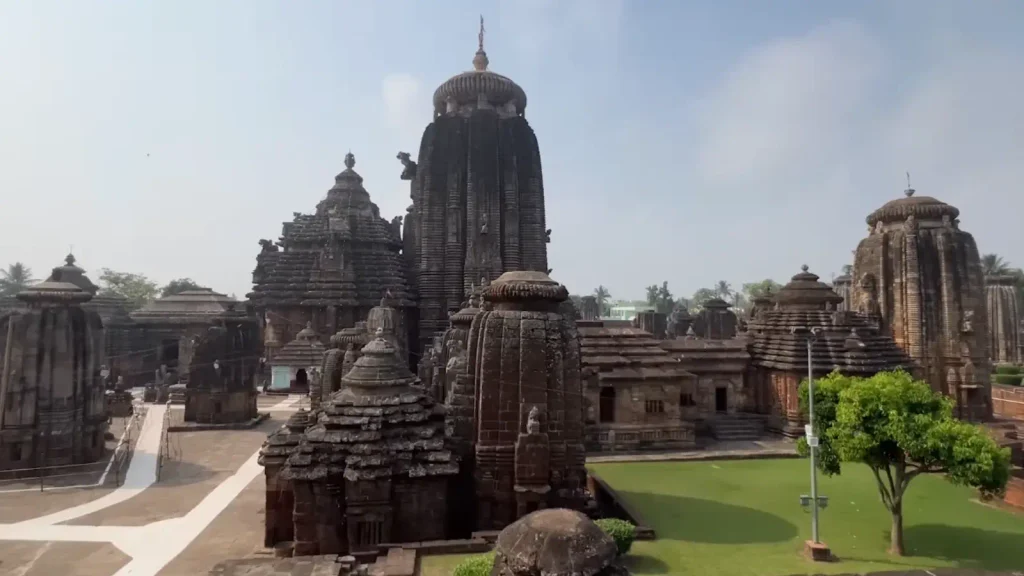
The first sight of Lingaraj Temple can feel overwhelming. Its towering stone structure, detailed carvings, enormous courtyard, and collection of smaller shrines create the feeling of entering an entire sacred world rather than a single temple.
What makes Lingaraj especially fascinating is its connection with both Shaivism and Vaishnavism. The principal deity is worshipped as Harihara, reflecting the combined identity of Shiva and Vishnu. This spiritual connection gives Lingaraj Temple a character that is deeply rooted in Odisha’s religious traditions.
Lingaraj temple history
The present structure belongs broadly to the 11th century AD, although traditions associated with the sacred site are considered much older. Official tourism sources connect the temple with the Somavamsi period and describe it as one of the finest expressions of mature Kalinga temple architecture.
There is also an interesting tradition surrounding the antiquity of the deity. The Shiva lingam is regarded as Swayambhu, meaning self-manifested or naturally originated. Some traditions place worship at the site much earlier than the present temple structure.
This creates an important distinction: the history of the sacred site and the history of the existing stone temple are not necessarily the same.
Lingaraj Temple Architecture: A Stone Story
The architecture of Lingaraj Temple is one of the main reasons it remains so admired.
The temple follows the Kalinga style of architecture, with the principal structure rising dramatically above the surrounding buildings.
The complex can broadly be understood through four major architectural sections:
- Vimana – the main sanctum and towering central structure
- Jagamohana – the assembly or gathering hall
- Nata Mandapa – associated with music and dance
- Bhoga Mandapa – the hall connected with offerings
The increasing height and carefully planned relationship between these structures create a sense of upward movement.
The stone surfaces are equally impressive. Carvings depict divine figures, animals, human forms, decorative patterns, and scenes connected with traditional life and mythology.
Instead of viewing the carvings as decoration alone, look at them as a visual language. The temple’s walls communicate ideas through stone.
Lingaraj Temple Timings
The commonly published tourism timing for Lingaraj Temple is approximately:
Lingaraj Temple Daily Ritual Timings
| 🛕 Ritual / Puja | ⏰ Approximate Time |
|---|---|
| 🌅 Mangala Aarti | 5:30 AM – 6:00 AM |
| 🚿 Abakasha | 6:00 AM – 7:00 AM |
| 🍚 Sakala Dhupa | 8:00 AM – 9:00 AM |
| ☀️ Madhyana Dhupa | 11:30 AM – 12:00 PM |
| 🪔 Sandhya Dhupa | 6:30 PM – 7:00 PM |
| 🌙 Badasinghara Aarti | 9:00 PM – 9:30 PM |
Best time for visitors: Early morning is generally a good choice for a more peaceful darshan and to avoid heavier crowds.
Who Can Enter Lingaraj Temple?
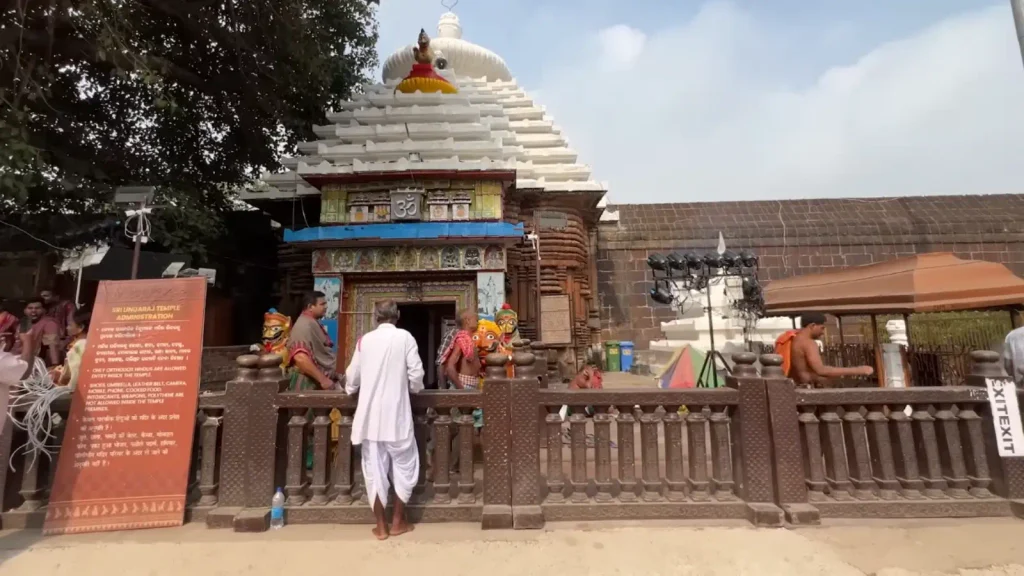
One important point visitors should know before planning a visit is that entry into the temple premises is restricted to Hindus.
Non-Hindu visitors can still appreciate the magnificent architecture from a specially designated viewing platform outside the complex.
- Hindu devotees: Generally permitted to enter the temple and participate in darshan, subject to temple rules.
- Non-Hindus:Not permitted inside the main temple complex. They can view the temple from the designated viewing area/platform outside.
- Foreign tourists: Usually cannot enter the main temple premises if they are non-Hindu.
- Children: Children can enter when accompanied by their parents/guardians, subject to temple rules.
- Photography: Photography inside the temple is generally restricted/prohibited. Follow the instructions of temple authorities.
- Mobile phones and electronic items: Restrictions may apply inside the temple. It is safest to avoid carrying unnecessary electronic items.
- Footwear: Shoes and other footwear must be removed before entering the temple area.
- Dress: Wear modest and traditional clothing suitable for a religious place.
- Food, leather items and other belongings: Certain items may not be allowed inside; follow security and temple instructions.
What can you see inside?
If you are eligible to enter, the Lingaraj Temple complex includes several important shrines and sacred areas, including:
- Lingaraj Temple – the main shrine dedicated to Lord Lingaraj.
- Garbhagriha – the innermost sanctum where the presiding deity is worshipped.
- Jagamohana – the assembly/prayer hall in front of the sanctum.
- Natamandira – the traditional hall associated with temple rituals and worship.
- Bhogamandapa – the hall associated with offerings.
- Other smaller shrines – the temple complex contains numerous subsidiary shrines dedicated to different deities.
- Temple sculptures and carvings – the complex is famous for its Kalinga-style architecture and detailed stonework.
What Makes Lingaraj Temple Different?
Lingaraj Temple stands out for its ancient Kalinga architecture, detailed stone carvings, and strong connection with Odisha’s Shaiva and Vaishnava traditions. The temple is dedicated to Lord Lingaraj, worshipped as a form of Shiva, while also reflecting the influence of Lord Vishnu. Its grand Deula, Jagamohana and Natamandira create a distinctive architectural style that makes it one of Bhubaneswar’s most remarkable heritage landmarks.
What makes the temple even more special is its living tradition. Daily rituals, festivals and age-old customs continue to connect the temple with the spiritual and cultural life of Odisha.
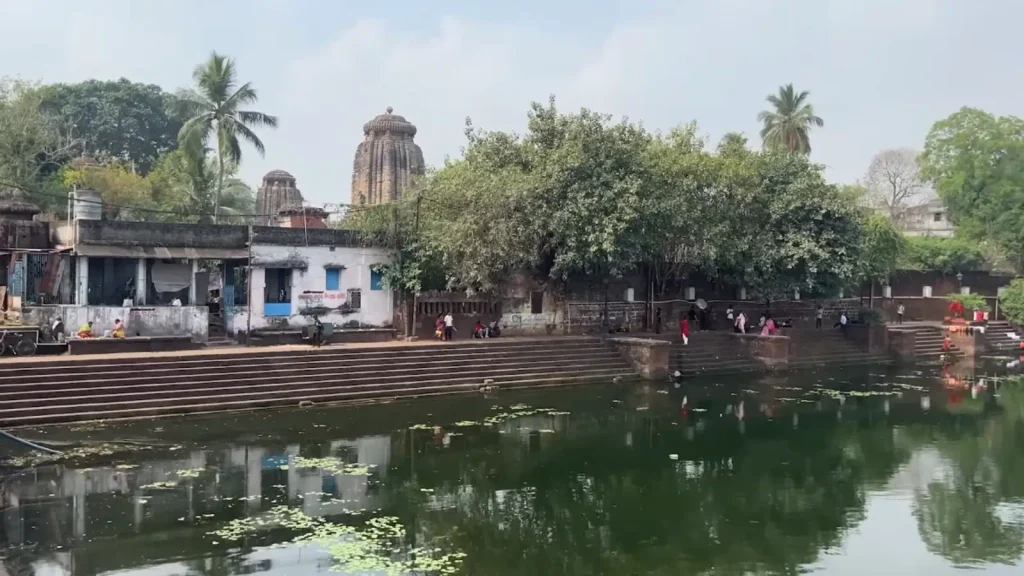
Fourth, the temple exists within a wider sacred landscape that includes Bindu Sagar, one of the important water bodies associated with the religious life of Old Bhubaneswar.
And finally, the surrounding Old Town still preserves the atmosphere of historic Bhubaneswar.
Festivals at Lingaraj Temple
Festivals at Lingaraj Temple are an important part of Bhubaneswar’s spiritual and cultural identity. Celebrations continue throughout the year, but Maha Shivaratri, Ashokashtami (Rukuna Rath Yatra), and Chandan Yatra are among the most prominent.
Mahashivratri
Maha Shivaratri is the most important festival of Lingaraj Temple and is usually observed in February or March. Devotees fast, offer prayers to Lord Lingaraj and remain awake during the night. The highlight of the celebration is the lighting of the Mahadipa, a large sacred lamp placed on top of the temple tower at night.
The festival attracts thousands of devotees, making the Old Town area of Bhubaneswar especially vibrant and spiritually charged.
Ashokashtami and Rukuna Rath Yatra
Ashokashtami is the famous chariot festival of Lord Lingaraj, generally celebrated in March or April. The representative deity, Lord Chandrashekhara, is taken out of the temple in a beautifully decorated chariot and carried to Rameshwar Temple, traditionally regarded as the maternal aunt’s home.
One fascinating feature of the Rukuna Rath Yatra is that the chariot is traditionally said to move without taking a U-turn, which gives the festival its distinctive character. After a stay of several days, the deities return to Lingaraj Temple in the Bahuda procession
Chandan Yatra
Chandan Yatra is a colourful summer festival associated with Lingaraj Temple. It traditionally continues for around 21 days from Akshaya Tritiya. During the celebration, the representative deities are taken to Bindu Sagar for ceremonial boat rides. Sandalwood paste and water are associated with the rituals, symbolising relief from the summer heat.
The sight of decorated boats moving across Bindu Sagar adds a special cultural atmosphere to Old Bhubaneswar.
Bindu Sagar: The Sacred Water Beside the Temple
A visit to Lingaraj Temple becomes more interesting when combined with Bindu Sagar.
Bindu Sagar is a historic and sacred lake located near the famous Lingaraj Temple in Old Town, Bhubaneswar. Surrounded by ancient temples and traditional architecture, the lake holds deep religious importance in Odisha. According to local belief, its water contains drops (bindu) collected from many sacred rivers and holy water sources across India.
The lake becomes especially beautiful during festivals and religious occasions, when devotees gather around its banks for prayers and rituals. Its calm waters, historic surroundings, and spiritual atmosphere make Bindu Sagar an important place to experience Bhubaneswar’s ancient temple culture.
Best Way to Experience Lingaraj Temple
Do not treat Lingaraj Temple like a quick sightseeing stop.
Arrive early, observe the surrounding Old Town, spend time understanding the architecture, and look carefully at the stone carvings.
If you cannot enter the temple complex, use the designated viewing area to understand the complete structure from outside.
The best experience is not necessarily about taking the perfect photograph. It is about noticing how the temple continues to function as part of everyday spiritual life.
Important Things to Know Before Visiting
Keep these points in mind:
- Check the latest temple timings before travelling.
- Entry restrictions apply to non-Hindu visitors.
- Cameras and electronic gadgets are not permitted inside the temple premises according to Odisha Tourism.
- Dress respectfully when visiting the temple area.
- Festival days can be extremely crowded.
- Keep extra time for exploring the surrounding Old Bhubaneswar area.
- Do not rush through the smaller shrines and surrounding heritage streets.
Lingaraj Temple is more than one of Bhubaneswar’s most famous landmarks. It is a living symbol of Odisha’s spiritual traditions, Kalinga architecture, ancient craftsmanship, and cultural identity. From the towering stone temple and intricate carvings to the worship of Harihara and the vibrant festivals, every part of Lingaraj has a story to discover.
For travellers, the temple offers something beyond ordinary sightseeing. It is a chance to experience the history of Bhubaneswar through a place where devotion and heritage continue together. If you are exploring Odisha, Lingaraj Temple deserves a place on your itinerary—not only for its architecture, but for the atmosphere and traditions that make it unique.
FAQs
1.What is Lingaraj Temple famous for?
Lingaraj Temple is famous for its ancient Kalinga-style architecture, towering temple structure, detailed stone carvings, and worship of Lord Lingaraj, traditionally associated with Harihara—the combined form of Shiva and Vishnu.
2.What are the timings of Lingaraj Temple Bhubaneswar?
The commonly published temple timings are approximately 6:30 AM to 7:30 PM. Timings may change during festivals, special rituals, or other temple occasions, so visitors should check before travelling.
3.What is the history of Lingaraj Temple?
The present Lingaraj Temple is generally associated with the 11th century and the Somavamsi period. The sacred traditions connected with the site are considered much older than the existing temple structure.
4.Who is the main deity of Lingaraj Temple?
The principal deity is Lord Lingaraj, worshipped as Harihara, representing the combined traditions of Shiva and Vishnu.
5.Can non-Hindus enter Lingaraj Temple?
No. Non-Hindu visitors are not permitted inside the temple premises. However, the temple can be viewed from a designated platform outside the complex.
6.What is the best time to visit Lingaraj Temple?
Early morning is a good time to visit because the weather is generally more comfortable and the temple atmosphere can be calmer. Festival periods are especially vibrant but can also be very crowded.
7.How tall is Lingaraj Temple?
The main temple tower is approximately 180 feet high, making it one of the most impressive examples of Kalinga temple architecture in Bhubaneswar.
8.What festivals are celebrated at Lingaraj Temple?
Major celebrations include Mahashivratri, Ashokashtami/Rukuna Rath Yatra, and Chandan Yatra. These occasions bring special rituals, processions, and large gatherings of devotees.
9.How many temples are inside Lingaraj Temple complex?
The Lingaraj Temple complex contains around 150 subsidiary shrines, making the entire complex much larger and more diverse than the main temple alone.
10.What should I know before visiting Lingaraj Temple?
Visitors should dress respectfully, follow temple rules, check current timings, and be aware of entry restrictions. Photography and electronic gadgets may not be permitted inside the temple premises.