
The Jagannath Temple rituals in Puri are a carefully followed sequence of daily nitis that begin in the early morning and continue through the day until the deities retire at night. From the opening of the temple and morning sevas to the preparation and offering of Mahaprasad, each ritual has its own time, tradition and spiritual significance. For visitors, understanding these daily practices gives a much better idea of how life inside the temple unfolds beyond the main darshan.
Why Are Jagannath Temple Rituals Unique?
The rituals of the Jagannath Temple are unlike those of any other Hindu temple in the world. Every day, Lord Jagannath, Lord Balabhadra, and Devi Subhadra are worshipped through a carefully planned sequence of sevas that treat the deities as living divine beings. From waking them in the early morning to offering multiple meals, changing their attire, decorating them with flowers, and finally putting them to rest at night, every ritual symbolizes love, care, and devotion.
Another remarkable aspect of the Jagannath Temple rituals is the preparation of Mahaprasad in the temple’s massive kitchen. The food is cooked using traditional methods, offered to the deities, and then distributed equally among devotees without distinction of caste or social status, reflecting the temple’s message of equality and universal devotion. Unique combination of daily sevas, sacred food offerings, ancient customs, and grand festivals makes the Jagannath Temple one of the most spiritually significant temples in India.
Complete Daily Sevas Schedule of Jagannath Temple
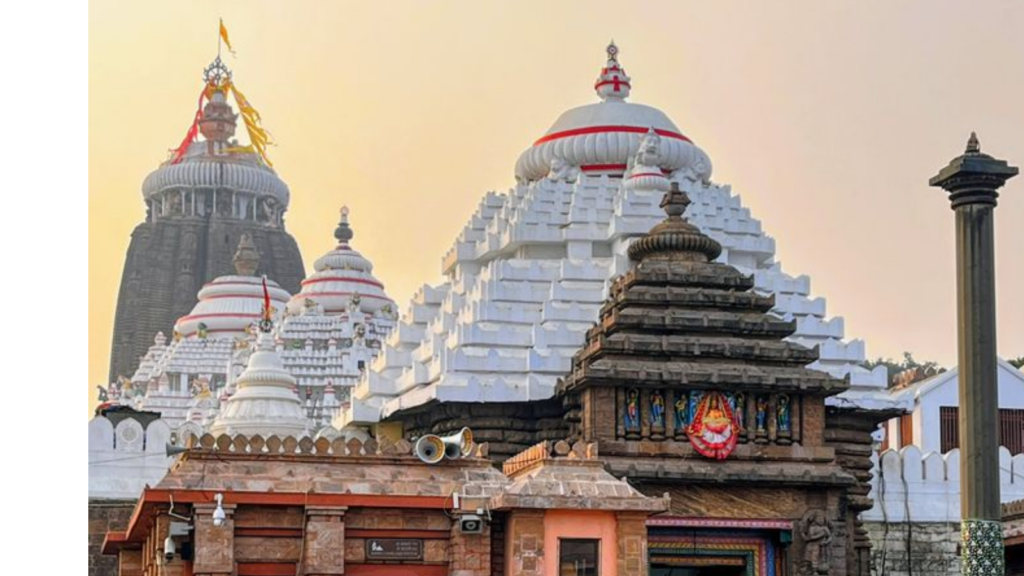
Jagannath Temple in Puri follows a well-organized daily schedule of sacred rituals known as Sevas. These rituals are performed by hereditary Sevayats, who worship Lord Jagannath, Lord Balabhadra, and Devi Subhadra as living deities. From the early morning Mangala Alati to the final Pahuda ritual at night, each seva has a specific spiritual significance and follows centuries-old traditions. The timings below are approximate and may vary on festival days, special occasions, and according to the temple’s traditional schedule.
| 5:00 AM | Mangala Alati | Awakening the deities with prayers and lamps |
| 5:30 AM | Mailam | Changing the deities’ clothes and ornaments |
| 6:00 AM | Abakash | Morning cleansing and purification rituals |
| 6:30 AM | Tadapa Lagi & Rosha Homa | Dressing the deities and beginning kitchen rituals |
| 7:00 AM | Gopala Ballava Bhoga | Morning breakfast offering |
| 10:00 AM | Sakala Dhupa | Main morning meal offering |
| 12:30 PM 5:30 PM | Madhyahna Dhupa Sandhya | Midday bhoga offering Temple Flag Changing Ceremony |
| 7:00 PM | Sandhya Dhupa | Evening worship |
Mangala Alati – The Divine Awakening of Lord Jagannath
Mangala Alati is the first ritual of the day and marks the ceremonial awakening of Lord Jagannath, Lord Balabhadra, and Devi Subhadra. Before sunrise, temple priests open the sanctum and offer lamps, incense, and prayers to welcome the new day. The atmosphere is filled with the sound of conch shells, temple bells, and sacred chants, creating a deeply spiritual experience.
For devotees, witnessing Mangala Alati is considered highly auspicious because it symbolizes the beginning of a new day under the blessings of the Lord. This ritual reminds worshippers to start their own day with gratitude, faith, and devotion.
Temple Flag Changing Ceremony
One of the most fascinating daily traditions of the Jagannath Temple is the changing of the Patitapabana Bana, the flag that flies atop the temple’s 214-foot-high shikhara. Every evening, a trained Sevayat climbs the temple’s towering spire without modern safety equipment to replace the old flag with a new one.
This centuries-old ritual is performed with unwavering faith and precision. According to temple tradition, the flag must be changed every day before sunset, regardless of the weather. Devotees believe that offering a flag to Lord Jagannath brings blessings, prosperity, and protection to their families.
Abakash – The Morning Purification Ritual
Abakash is the morning cleansing ritual of the deities. Symbolically, Lord Jagannath, Lord Balabhadra, and Devi Subhadra perform their daily personal care, just as any member of a royal household would.
During this seva, the priests conduct symbolic brushing of the teeth, bathing, and purification using sacred water, mirrors, and traditional rituals. Although the deities are not physically bathed every day, the ceremony represents cleanliness, health, and spiritual purity. The Abakash ritual teaches devotees the importance of beginning each day with both physical and spiritual purification.
Gopala Ballava Bhoga – The Divine Breakfast Offering
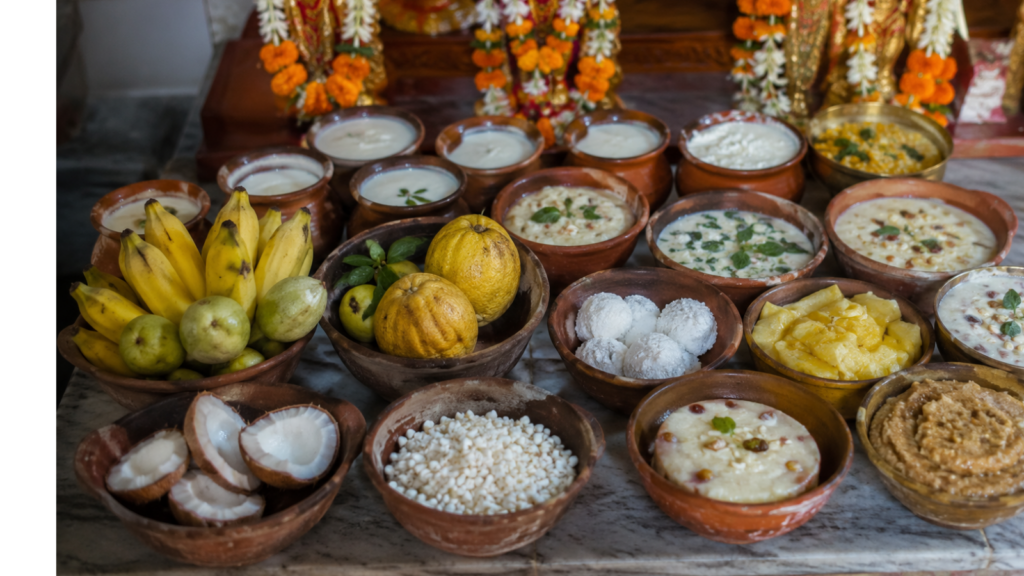
After the morning rituals are completed, the deities are offered Gopala Ballava Bhoga, which is considered the breakfast of Lord Jagannath. This offering usually includes fresh fruits, milk, butter, coconut, bananas, puffed rice, sweets, and other light food items.
The food is first offered with Vedic prayers and then accepted as the Lord’s blessing. Once the offering is complete, it becomes sacred and is later distributed among devotees. Gopala Ballava Bhoga symbolizes gratitude, nourishment, and the loving relationship between devotees and the Lord. It also reflects the belief that every meal should first be offered to God before being consumed.
Sakala Dhupa – The Morning Main Meal Offering
After the completion of the morning rituals, Sakala Dhupa is offered to Lord Jagannath, Lord Balabhadra, and Devi Subhadra. This is one of the most important food offerings of the day and is considered the deities’ main morning meal.
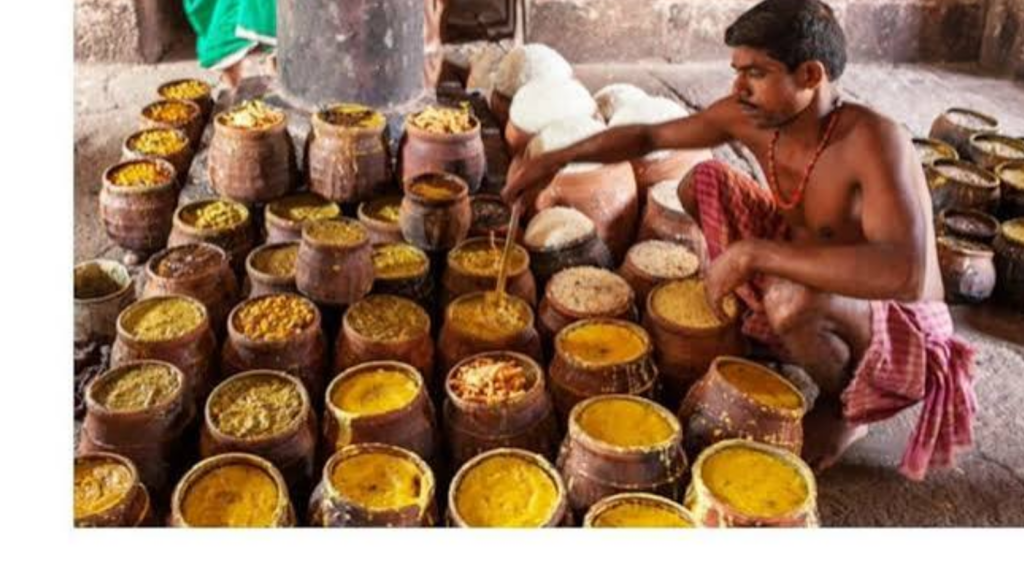
The bhoga is prepared in the temple’s sacred kitchen using traditional methods that have remained unchanged for centuries. The food is cooked in earthen pots over wood-fired stoves without the use of modern cooking equipment. Every ingredient is selected with great care to maintain purity and follow temple customs.
Offering generally includes a variety of vegetarian dishes such as rice, dal, vegetable curries, khichdi, pitha (traditional cakes), leafy vegetables, and other delicacies. After the food is ceremonially offered to the deities with Vedic mantras, it becomes sacred and is later distributed as Mahaprasad. Sakala Dhupa symbolizes gratitude to the Divine Provider and reminds devotees that food is a sacred blessing from God.
Madhyahna Dhupa – The Midday Bhoga Offering
Madhyahna Dhupa is the afternoon meal offered to the deities and forms another significant part of the temple’s daily worship schedule. This ritual is performed after the morning darshan and before the temple enters its afternoon routine.
A larger variety of dishes is prepared for this offering, reflecting the royal tradition of serving the deities as kings of the universe. The meal often includes steamed rice, dal, mixed vegetable curries, sweet dishes, pakhala (fermented rice on certain occasions), pitha, and seasonal preparations. The Madhyahna Dhupa represents abundance, compassion, and the Lord’s continuous care for all living beings
Sandhya Dhupa – The Evening Offering
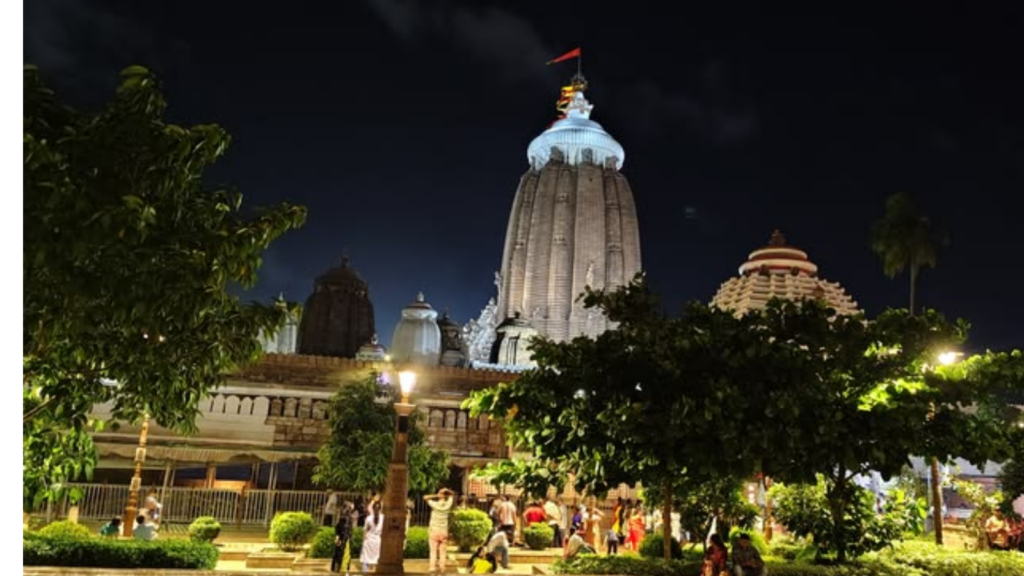
As the sun sets over the holy city of Puri, the Jagannath Temple enters its evening worship with the Sandhya Dhupa ritual. This sacred offering marks the transition from day to night and expresses gratitude for the blessings received throughout the day.
Evening bhoga includes freshly prepared vegetarian dishes, sweets, rice, dal, and seasonal delicacies. Before presenting the food, priests perform traditional rituals using lamps, incense, flowers, and sacred chants. Atmosphere inside the temple becomes deeply devotional as the sounds of bells, conch shells, and bhajans fill the air. Devotees gather to witness the evening rituals and seek the blessings of Lord Jagannath before the day comes to an end.
Bada Singhara Besha – The Royal Night Decoration
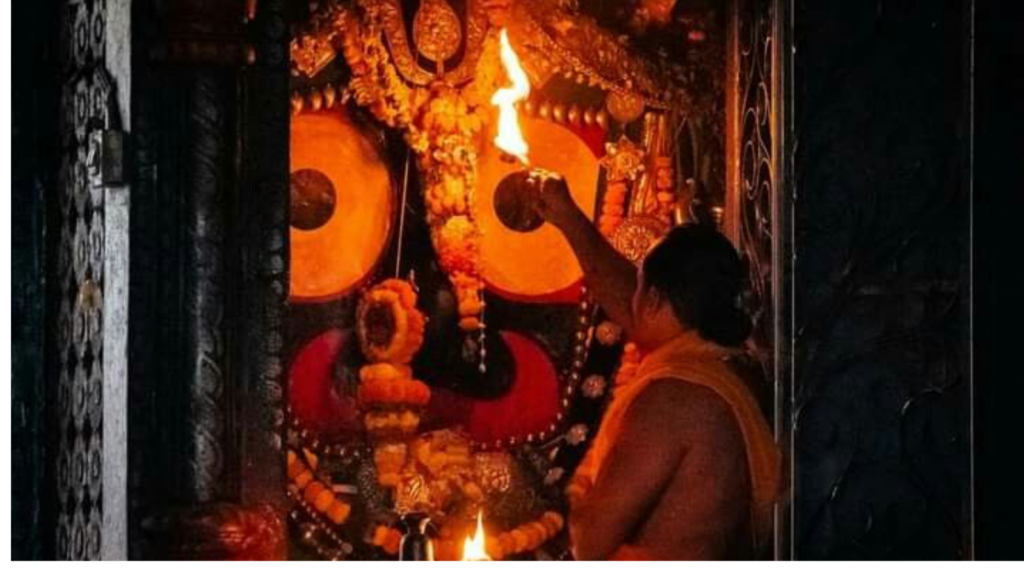
One of the most beautiful rituals performed in the Jagannath Temple is the Bada Singhara Besha, which takes place late at night before the deities retire. During this seva, Lord Jagannath, Lord Balabhadra, and Devi Subhadra are adorned with magnificent silk garments, fragrant flower garlands, sandalwood paste, and exquisite ornaments. The floral decorations are carefully arranged, creating a divine and majestic appearance.
This ritual reflects the belief that the deities are royal personalities deserving the finest clothing, jewelry, and fragrances. The peaceful atmosphere during Bada Singhara Besha inspires devotion and allows devotees to experience the divine beauty of the Lord.
Pahuda – The Night Rest of the Deities
The final ritual of the day is Pahuda, during which Lord Jagannath, Lord Balabhadra, and Devi Subhadra are ceremonially put to rest. After the final prayers, the temple priests close the sanctum doors, signaling the end of the day’s worship. The deities are believed to retire for the night just like members of a royal family. Once the Pahuda ritual is complete, the temple remains closed until the next morning, when the sacred cycle of daily sevas begins once again with Mangala Alati.
Jagannath Temple Bhoga
One of traditions in the Jagannath Temple is the offering of Bhoga, the food lovingly prepared and presented to Lord Jagannath, Lord Balabhadra, and Devi Subhadra. In Hindu tradition, food is first offered to the deities before it is consumed by devotees. This offering is considered an expression of gratitude, devotion, and surrender.
At the Jagannath Temple, Bhoga is prepared every day according to centuries-old traditions. Only vegetarian ingredients are used, and the food is cooked without onion or garlic. Every dish is prepared with strict attention to purity, using recipes that have been preserved through generations of temple cooks known as Suaras. Unlike ordinary meals, Bhoga is not prepared merely to satisfy hunger. It symbolizes love, faith, humility, and the eternal bond between the Lord and His devotees.
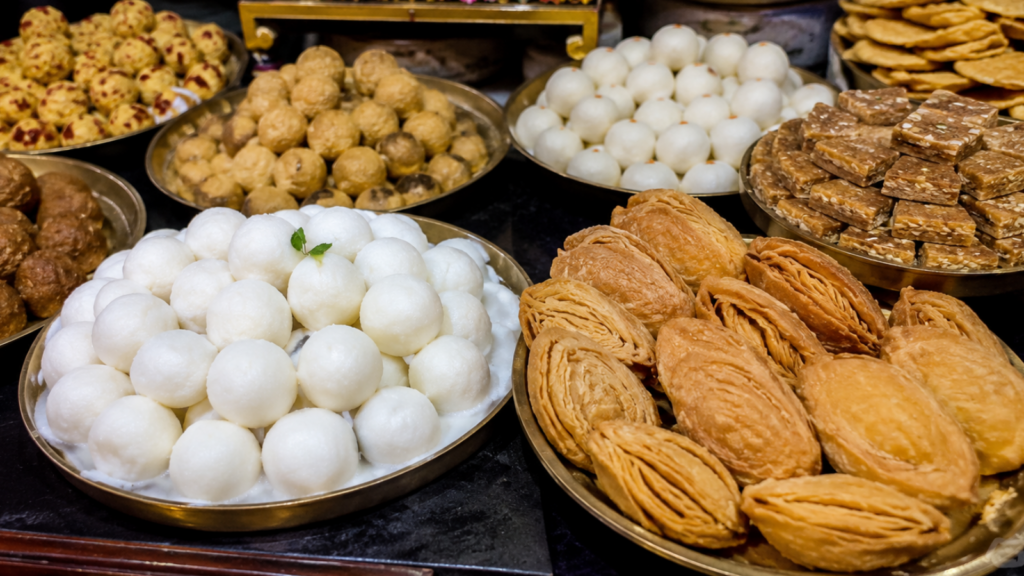
Chhappan Bhoga – The Famous 56 Sacred Offerings
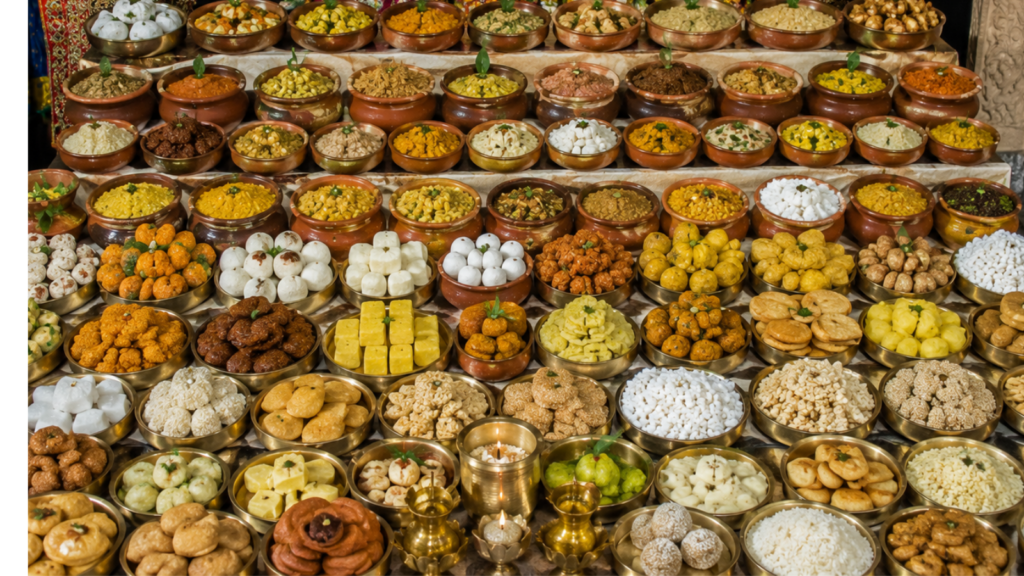
One of the most celebrated traditions of the Jagannath Temple is Chhappan Bhoga, which means “56 Offerings.” On special festivals and important religious occasions, Lord Jagannath is presented with fifty-six different varieties of food.
The Chhappan Bhoga menu includes:
Rice preparations, Dal varieties, Vegetable curries, Khichdi, Sweet rice, Kheer, Pitha, Ladoo, Khaja, Gaja, Rasabali, Coconut sweets, Milk-based desserts, Seasonal fruits, Traditional Odia delicacies and etc.
Mahaprasad – The Sacred Blessing of Lord Jagannath
After Bhoga is offered to the deities, it becomes Mahaprasad, one of the holiest forms of blessed food in Hinduism. Devotees believe that Mahaprasad carries the divine grace of Lord Jagannath and is spiritually purifying. One of the unique aspects of Mahaprasad is that it is shared equally among all devotees, regardless of caste, community, or social status. This tradition reflects the temple’s message of equality, unity, and universal brotherhood.
Mahaprasad is enjoyed by thousands of pilgrims every day, and many consider it an essential part of their visit to the Jagannath Temple. Whether eaten inside the temple premises or taken home for family members, it is regarded as a sacred blessing rather than ordinary food.
The World’s Largest Temple Kitchen
Jagannath Temple is home to one of the largest temple kitchens in the world. Every day, hundreds of temple cooks, known as Suaras, prepare thousands of meals for the deities and devotees.
The kitchen has hundreds of traditional clay ovens where food is cooked in earthen pots using firewood. A remarkable feature of this kitchen is the stacking of several earthen pots one above another over a single fire. According to temple tradition, the pot placed at the top cooks first, followed by the lower pots—a phenomenon regarded by devotees as a divine blessing. kitchen operates with extraordinary discipline, ensuring that fresh Mahaprasad is available every day for thousands of pilgrims visiting Puri.
Anand Bazaar – Where Devotees Receive Mahaprasad
Anand Bazaar is the sacred marketplace within the Jagannath Temple complex where devotees can receive and enjoy Mahaprasad after it has been offered to the deities. For many visitors, a pilgrimage to Puri is considered incomplete without receiving Mahaprasad from Anand Bazaar. The experience is not only about food but also about participating in a centuries-old tradition of devotion, community, and divine blessings.
Traditions of Jagannath Temple
Jagannath Temple is not only famous for its daily rituals but also for its sacred traditions and grand festivals that have been celebrated for centuries. These traditions reflect the deep spiritual connection between Lord Jagannath and His devotees and attract millions of pilgrims from across India and around the world.
Snana Yatra – The Sacred Bathing Festival
Snana Yatra is celebrated on the full moon day of the Hindu month of Jyeshtha. During this festival, the deities are ceremonially bathed with 108 pots of sacred water drawn from the temple’s holy well. After the grand bathing ceremony, the deities are believed to fall ill due to the extensive bathing and remain away from public view for a period known as Anavasara.
Rath Yatra –(The Grand Chariot Festival)
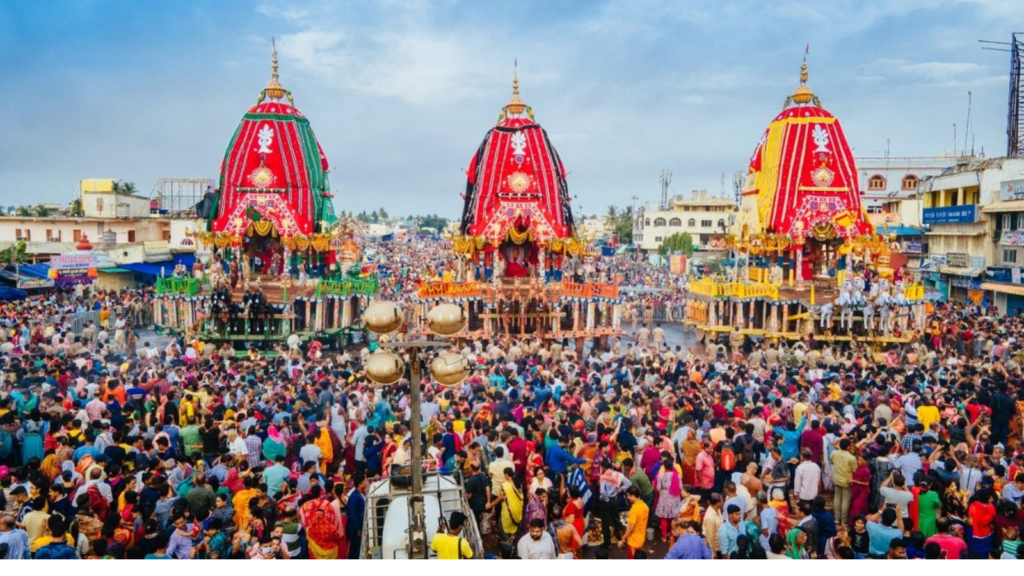
The Rath Yatra is the most celebrated festival of Lord Jagannath. Every year, Lord Jagannath, Lord Balabhadra, and Devi Subhadra leave the temple and travel in beautifully decorated wooden chariots to the Gundicha Temple.
Millions of devotees gather in Puri to pull the massive chariots with ropes, believing that participating in this sacred act brings divine blessings and spiritual merit. The festival symbolizes the Lord’s willingness to come out of the temple to bless all people, regardless of caste, religion, or social status.
Suna Besa (Golden Attire of Lord Jagannath)
Suna Besa, also known as the Golden Attire, is one of the most spectacular rituals of the Jagannath Temple. On this auspicious day, Lord Jagannath, Lord Balabhadra, and Devi Subhadra are adorned with magnificent gold ornaments while seated on their respective chariots outside the temple. Thousands of devotees gather to witness this grand event, believing that the divine darshan during Suna Besa brings prosperity, peace, and spiritual blessings.
Anavasara – The Period of Divine Rest
Following Snana Yatra, Lord Jagannath, Lord Balabhadra, and Devi Subhadra remain in seclusion for approximately fifteen days. This period is known as Anavasara. During this time, devotees cannot have regular darshan because the deities are believed to be recovering from illness. Temple priests perform special rituals privately until the deities reappear before the annual Rath Yatra.
Nabakalebara – The Sacred Renewal Ceremony
Nabakalebara is one of the rarest and most significant rituals of the Jagannath Temple. It takes place approximately every 12 to 19 years, when specific astronomical conditions are met. During this ceremony, new wooden idols of Lord Jagannath, Lord Balabhadra, Devi Subhadra, and Sudarshana are carved from specially selected neem trees known as Daru Brahma. The divine essence is ceremonially transferred from the old idols to the new ones in a secret ritual performed only by designated temple servitors.
Niladri Bije – The Return to the Temple
Niladri Bije marks the conclusion of the Rath Yatra festival. After their stay at the Gundicha Temple, the deities return to the main temple in a grand procession. A unique tradition during this ceremony is the offering of Rasagola by Lord Jagannath to Goddess Lakshmi, symbolizing reconciliation and divine love.
Spiritual Significance of Jagannath Temple Rituals
The rituals of the Jagannath Temple are more than religious ceremonies—they are expressions of devotion, discipline, humility, and divine love. Each seva represents an aspect of daily life, reminding devotees that every action can become an offering to God. From waking the deities at dawn to offering meals and finally putting them to rest at night, the rituals symbolize a loving relationship between the Divine and humanity.
Sharing of Mahaprasad without discrimination reflects the values of equality, compassion, and unity. These traditions inspire millions of devotees to live with faith, gratitude, and selfless service.
Having experienced Puri closely, we believe the Jagannath Temple rituals are best understood by seeing them as a living tradition rather than simply a list of ceremonies. From the early morning Mangala Alati to Mahaprasad and the final Pahuda, these timeless customs are what give a visit to Puri its unique spiritual character.