
The Jagannath deities have no traditionally carved hands or feet because their unusual forms come from a sacred legend associated with King Indradyumna, Lord Jagannath, and the divine carpenter Vishwakarma. According to popular Odia tradition, Vishwakarma began carving the wooden forms of Lord Jagannath, Lord Balabhadra, and Devi Subhadra but disappeared before completing the idols after the workshop door was opened too early. Devotees believe that the unfinished forms were not a mistake—they became a powerful symbol of the Lord’s divine and universal nature.
For visitors experiencing the Jagannath Temple in Puri, the first sight of these distinctive deities can raise an immediate question: Why don’t Jagannath, Balabhadra, and Subhadra have hands and feet like traditional Hindu idols?
The answer combines an ancient legend, spiritual symbolism, and a unique tradition that makes the Jagannath deities unlike almost any other temple idols in India.
The Legend Behind the Unusual Form
The story begins with King Indradyumna, who wanted to establish a magnificent shrine dedicated to Lord Vishnu. According to tradition, the king eventually received divine guidance about creating the sacred forms of Jagannath, Balabhadra, and Subhadra.
A mysterious divine carpenter appeared and agreed to create the wooden deities.
However, he placed one important condition on the work.
Vishwakarma’s Strict Condition
The divine carpenter is traditionally identified as Vishwakarma, the celestial architect and craftsman.
He selected sacred wood and entered a private room to carve the deities. He told the king that nobody should disturb him while he worked.
The door had to remain closed.
The king agreed.
For several days, people outside the room heard the sound of carving and hammering. Everyone waited patiently, believing that the divine work was progressing inside.
Then, unexpectedly, the sounds stopped.
Why Was the Door Opened?
When the sounds stopped, concern grew inside the palace.
The king and queen began wondering whether something had happened to the mysterious carpenter.
According to the popular version of the story, Queen Gundicha became particularly anxious. She urged the king to open the door and check what was happening.
The king eventually gave in.
When they opened the door, the divine carpenter had disappeared.
But inside the room, they found the three sacred wooden forms.
The work appeared unfinished.
Jagannath had large, expressive eyes but no traditionally carved hands or feet. Balabhadra and Subhadra also had distinctive incomplete-looking forms.
The carpenter was nowhere to be found.
Why Didn’t King Indradyumna Finish the Idols?
This is where the story takes a deeper spiritual meaning.
Although the deities appeared incomplete from a human point of view, the king understood that something extraordinary had happened.
The forms were accepted as divine.
Instead of asking another craftsman to complete the hands and feet, the sacred forms were preserved.
This tradition explains why the distinctive appearance of Lord Jagannath continues to this day.
For a visitor standing before the deities, this story can completely change the way the unusual forms are understood. What may initially look unfinished begins to feel intentional and deeply symbolic.
What Do Jagannath’s Missing Hands Mean?
The absence of traditionally carved hands carries an important spiritual interpretation.
Devotees believe that the Lord does not need physical hands to reach, bless, or protect His devotees.
His divine presence itself is considered sufficient.
The symbolism also suggests that God’s ability is not limited by a physical human form. The Lord can accept devotion, offer grace, and remain connected with devotees without needing ordinary limbs.
So, when you look at Jagannath’s distinctive form, the missing hands can be understood not as a weakness but as a reminder of limitless divine power.
What Do the Missing Feet Symbolize?
The absence of carved feet also has a spiritual interpretation.
A human being needs feet to travel from one place to another. But devotees believe that the divine does not have such limitations.
Lord Jagannath is believed to be present wherever His devotees remember Him.
Therefore, the lack of feet can symbolize the Lord’s omnipresence—the belief that He does not need to physically walk anywhere to be with His devotees.
This makes the unusual form especially meaningful when viewed from a devotional perspective.
Why Are Jagannath’s Eyes So Large?
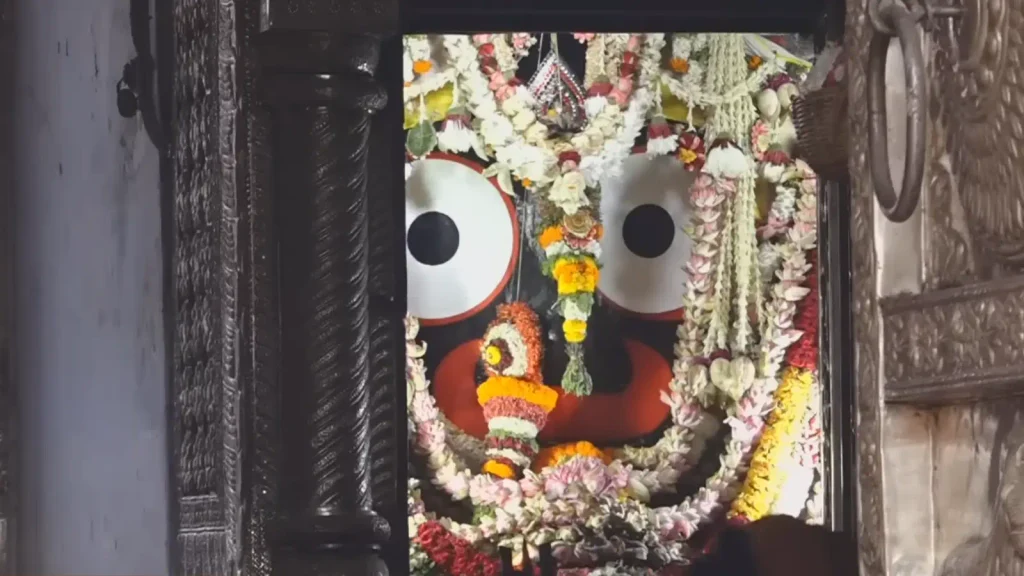
The enormous round eyes are one of the most recognizable features of Lord Jagannath.
They immediately attract the attention of visitors inside the temple.
Devotees commonly associate these wide-open eyes with eternal awareness, watchfulness, and compassion.
The Lord appears to look outward continuously, without closing His eyes.
For many devotees, this creates a powerful emotional experience: the feeling that Jagannath is always watching over His people.
The eyes also contribute to the unique visual identity of the Jagannath tradition.
Why Do Jagannath, Balabhadra and Subhadra Look Different?
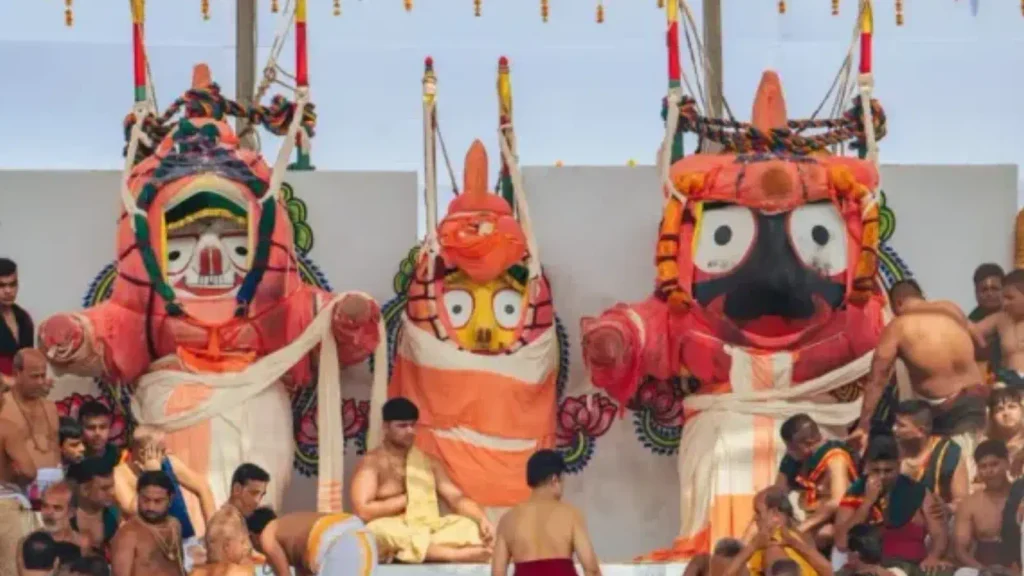
The three deities do not have identical forms.
Lord Jagannath has a dark appearance, large round eyes, and a distinctive facial form.
Lord Balabhadra has a lighter appearance and a different facial design.
Devi Subhadra has a central position between the two brothers and has her own distinctive form.
Together, the three create one of the most recognizable sacred groups in Hindu worship.
Their forms do not follow the conventional proportions commonly seen in many other Hindu temple sculptures. That difference is one of the reasons visitors often become curious about the story behind them.
What It Feels Like to See the Deities in Puri
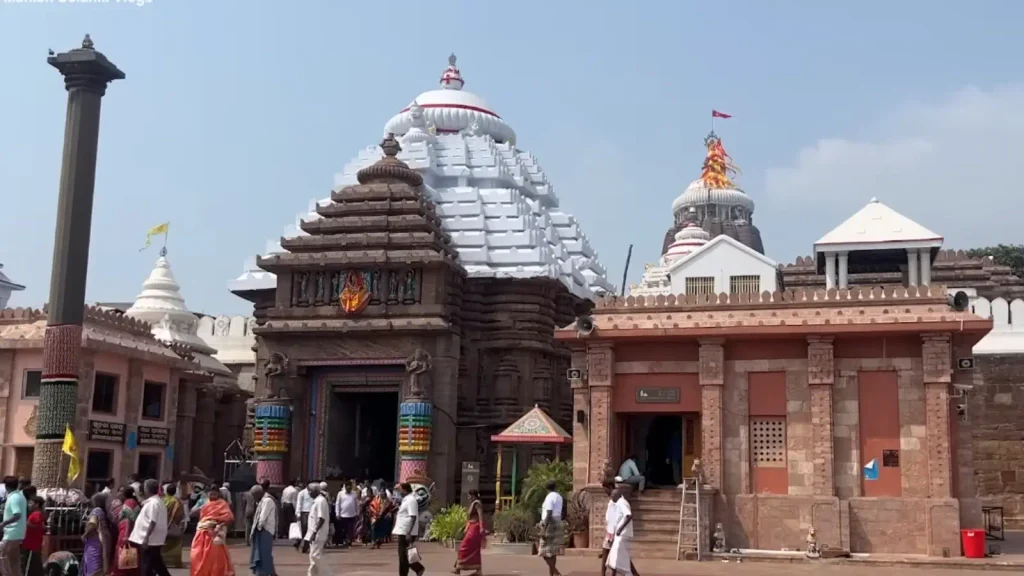
The experience of seeing the Jagannath deities in Puri is different from simply looking at a photograph.
When you first encounter the distinctive forms, you may notice the huge eyes, the absence of conventional limbs, and the colorful decorations.
But after learning the traditional story, those features can feel completely different.
You no longer see an unfinished wooden figure.
You see a form surrounded by centuries of faith, ritual, storytelling, and devotion.
For many visitors, this is one of the most memorable aspects of visiting the Jagannath Temple.
The Deities Are Recreated Through Nabakalebara
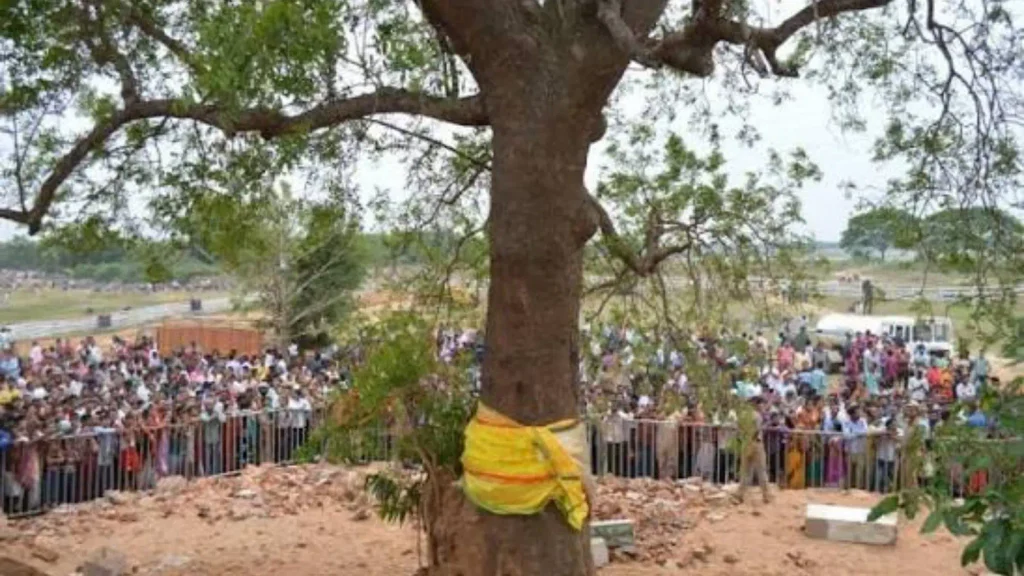
Another remarkable part of the Jagannath tradition is Nabakalebara, the sacred ceremony in which new wooden bodies are created for the deities according to established religious traditions.
The old forms are ceremonially replaced with new ones.
Yet the distinctive appearance remains.
The new wooden forms continue the traditional design of Jagannath, Balabhadra, Subhadra, and Sudarshan.
This shows that the unusual form is not simply connected to one historical set of wooden idols. It has become an essential part of the living Jagannath tradition.
Why This Story Matters to Visitors
If you visit Puri without knowing this story, the appearance of the deities may seem mysterious.
But once you understand the traditional explanation, several details become easier to appreciate.
The large eyes are not simply artistic decoration.
The missing hands are not viewed by devotees as a defect.
The missing feet are not considered an ordinary imperfection.
The unusual shape represents a sacred tradition that has continued through generations.
That is what makes a visit to the Jagannath Temple more than sightseeing. Understanding the story behind what you see can make the experience much more meaningful.
The Deeper Message of Lord Jagannath’s Form
The story ultimately encourages devotees to look beyond physical appearance.
A traditional human image of God may have clearly carved hands, feet, and other features. Jagannath presents a very different vision.
His form reminds devotees that the divine cannot always be limited to human ideas of perfection.
He can bless without hands.
He can reach devotees without feet.
He can watch over the world through His enormous eyes.
And He can remain spiritually present without conforming to conventional artistic forms.
That is why the distinctive appearance of Lord Jagannath has remained such a powerful part of Odisha’s spiritual heritage.
According to popular Odia tradition, their unusual forms originated from the story of the divine carpenter who left the idols before completing their limbs. Over time, devotees gave this appearance a deeper spiritual meaning.The missing hands represent divine power beyond physical limitations.The missing feet represent the Lord’s presence everywhere.The enormous eyes represent constant awareness and compassion.For someone visiting Puri, knowing this story can transform the way the Jagannath deities are experienced. What first appears unusual becomes a powerful reminder that divinity does not have to follow the form humans expect.That is perhaps the most fascinating lesson behind the unique appearance of Lord Jagannath.
FAQs
1.Why does Lord Jagannath have no hands or feet?
According to popular Odia tradition, the divine carpenter Vishwakarma left the wooden form unfinished after the workshop door was opened before he completed his work. Devotees later accepted this unique form as the sacred appearance of Lord Jagannath.
2.Why are the Jagannath idols considered unfinished?
The traditional legend says that Vishwakarma was carving Jagannath, Balabhadra, and Subhadra in secrecy. When the door was opened too early, he disappeared, leaving the distinctive forms without traditionally carved hands and feet.
3.What is the spiritual meaning of Lord Jagannath’s missing hands and feet?
The missing hands symbolize that the Lord can bless and protect devotees without physical hands, while the missing feet represent His presence everywhere. The form reminds devotees that divine power is not limited by the human body.
4.Why does Lord Jagannath have such big round eyes?
Jagannath’s large, open eyes are commonly understood as a symbol of eternal awareness, compassion, and watchfulness. Devotees believe the Lord continuously watches over His devotees and the world.
5.Who made the idols of Lord Jagannath?
According to the traditional legend, Vishwakarma, the divine craftsman, created the wooden forms of Jagannath, Balabhadra, and Subhadra. He worked privately and disappeared after the workshop door was opened before the idols were completed.