Suna Besha
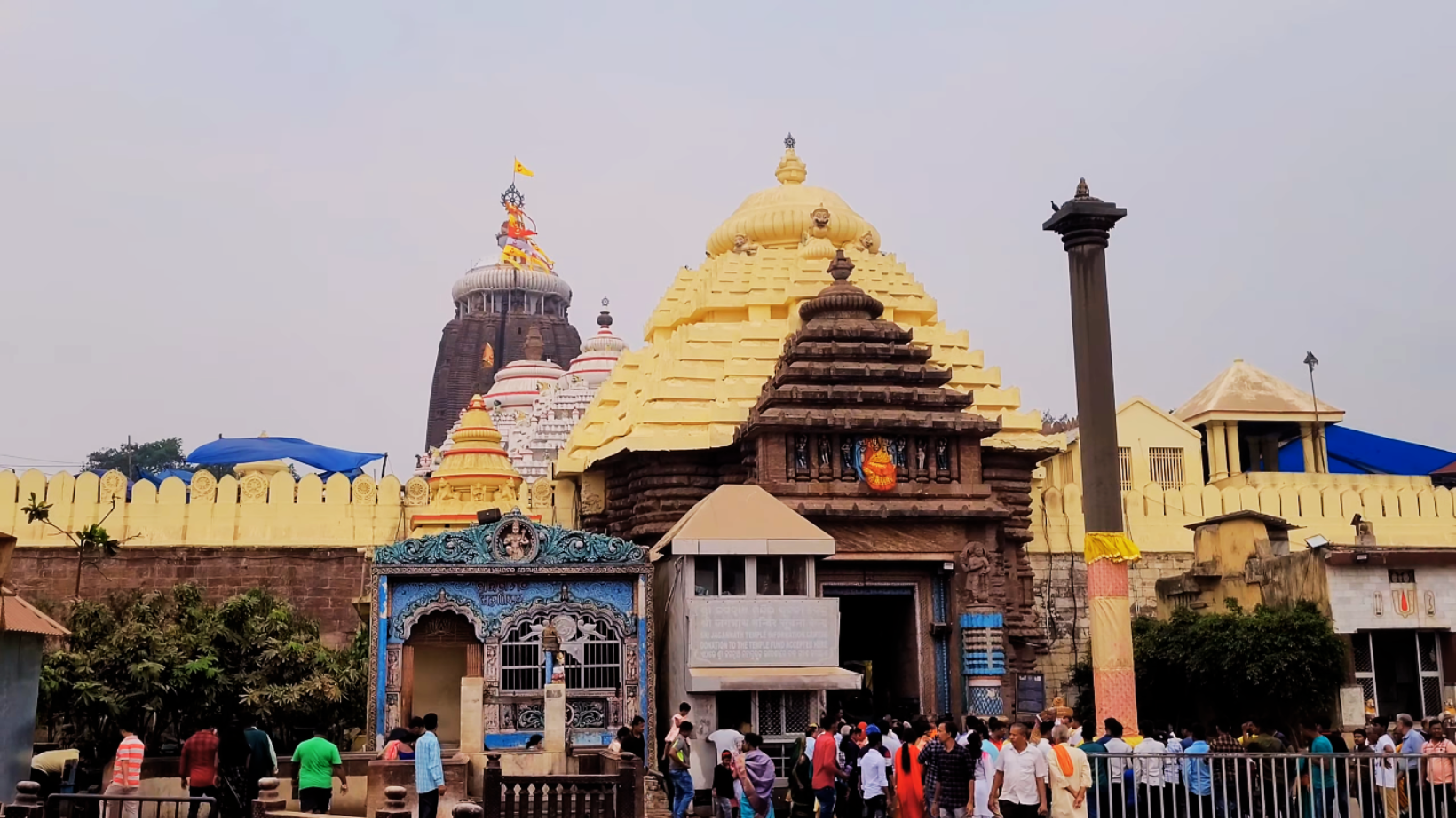
The Jagannath Temple in Puri stands as a beacon of spiritual and cultural heritage. Among its many revered traditions, the Suna Besha – also known as the “Golden Attire” – is one of the most awe-inspiring rituals associated with Lord Jagannath, his elder brother Lord Balabhadra, and their sister Goddess Subhadra. This grand ceremony, where the deities are adorned with intricate gold ornaments, is a spectacle of divine splendor that draws millions of devotees and tourists from across the globe. The Suna Besha is not merely a ritual but a profound expression of devotion, artistry, and the rich cultural legacy of Odisha.


The term Suna Besha derives from the Odia words suna (gold) and besha (attire or costume), signifying the adornment of the deities with gold jewelry and ornaments. This ritual is a highlight of the Jagannath Rath Yatra, a world-famous chariot festival, but it also occurs on other significant occasions throughout the year. Suna Besha during the Rath Yatra is expected to be a particularly grand event, captivating the hearts of devotees with its spiritual and visual magnificence.
This article delves into the details of the Jagannath Suna Besha 2026, exploring its date, rituals, historical origins, spiritual significance, and cultural impact. We will also examine the intricate preparations, the role of artisans, and the broader context of the Rath Yatra, offering a comprehensive understanding of this sacred tradition.
Date of Suna Besha 2026
The Jagannath Rath Yatra 2026 is scheduled to begin on June 27, 2026, with the main chariot procession marking the deities’ journey from the Jagannath Temple to the Gundicha Temple. The Suna Besha during the Rath Yatra is traditionally observed on July 6, 2026, coinciding with Bahuda Ekadashi (the 11th day of the bright fortnight in the month of Ashadha). This is the day after the Bahuda Yatra, the return journey of the deities from the Gundicha Temple to the Jagannath Temple. On this day, the deities are adorned with gold ornaments on their respective chariots stationed at the Singhadwara (Lion’s Gate) of the Jagannath Temple.
To the Suna Besha during the Rath Yatra, the ritual is observed four other times during the year inside the temple on the Ratna Singhasana (gem-studded altar). These occasions are:
- Magha Purnima (January, full moon day)
- Dussehra (October)
- Kartik Purnima (November)
- Dola Purnima (March)
The Suna Besha during the Rath Yatra is the most prominent and widely attended, as it takes place on the grand chariots in full public view, making it accessible to a larger audience, including non-Hindus who are otherwise restricted from entering the temple.
Historical Origins of Suna Besha
Suna Besha began in the 15th century during King Kapilendradeva’s reign (1434–1466 CE) of the Gajapati dynasty. After returning victorious from southern India with immense treasure – said to be carried on 16 elephants – he donated it to Lord Jagannath. On the advice of a temple servitor, this wealth was used to create gold ornaments for the deities, marking the start of Suna Besha.
This ritual symbolizes Lord Jagannath’s royal divinity and is also known as Rajadhiraja Besha or Raja Besha. The ornaments are stored in the temple’s inner treasury and displayed on select occasions, making it a deeply revered tradition in Odisha.
Rituals of Suna Besha
The Suna Besha is a meticulously planned ritual that involves a series of ceremonial steps, carried out with utmost devotion and precision by the temple’s priests and servitors. Below is a detailed overview of the rituals associated with the Suna Besha, particularly during the Rath Yatra.
Preparation of the Deities
The preparation for the Suna Besha begins days in advance. Deities – Lord Jagannath, Lord Balabhadra, and Goddess Subhadra – are bathed and dressed in new garments in preparation for the adornment. The gold jewelry, stored in the temple’s treasury, is carefully inspected and prepared by a team of skilled jewelers and priests. These ornaments, made of solid gold and often encrusted with precious gems, are designed to fit the unique wooden forms of the deities, which are characterized by their large, expressive eyes and simplified limbs.
The ornaments used in the Suna Besha are both intricate and symbolic, each piece carrying spiritual significance. Some of the key ornaments include:
- Suna Hasta (Golden Hands): Gold plates shaped like hands, adorned on the deities’ arms.
- Suna Payar (Golden Feet): Gold plates for the feet, symbolizing divine grace.
- Suna Mukuta (Golden Crown): Elaborate crowns encrusted with gems, signifying royalty.
- Suna Mayur Chandrika: Golden peacock feather worn by Lord Jagannath, representing his identity as Lord Krishna.
- Suna Chulapati – Golden ornament worn traditionally on the forehead to increase the beauty of the face
- Suna Kundal (Golden Earrings): Ornate earrings that enhance the deities’ divine appearance.
- Suna Rahurekha: Half-square-shaped golden aura around the deities’ faces, symbolizing their divine radiance.
- Suna Mala: Gold necklaces in various designs, adding to the regal splendor.
- Padma Mala – Lotus Shaped
- Sevati Mala – Shaped Like Small Sun Flower
- Kadamba Mala – Kadamba Flower Design (Round ball shape)
- Kante Mala – Big Gold Beads Design
- Agasti Mala – Moon Shaped flower design
- Mayur Mala – Shaped in Peacock feathers
- Champa Mala – Shaped liked Yellow champa Flower
- Suna Chakra – Golden Wheel
- Suna Gada – Golden bludgeon
- Suna Padma – Golden lotus
- Rupa Sankha – Silver conch
- Chakra and Conch (for Lord Jagannath): Gold chakra (disc) on the right hand and a silver conch on the left, symbolizing his divine powers.
- Plough and Mace (for Lord Balabhadra): Gold plough on the left hand and a golden mace on the right, representing strength and protection.
- Kireet and Shri Payara: Crowns and ornaments symbolizing royal power.
- Chandra Surjya: Moon and sun discs, denoting cosmic balance.
These ornaments, some weighing up to 150 tolas (approximately 1.7 kg) each, are crafted with extraordinary precision and are stored under heavy security in the temple’s treasury when not in use. The total weight of the gold used in the Suna Besha was historically reported to be over 208 kg, though current estimates suggest that 20–30 designs are now used due to practical considerations.
The Adornment Process
On the day of the Suna Besha, typically July 6, 2026, for the Rath Yatra event, the deities are placed on their respective chariots Nandighosha for Lord Jagannath, Taladhwaja for Lord Balabhadra, and Darpadalan for Goddess Subhadra stationed at the Singhadwara. The adornment process begins in the late afternoon, around 5:00 PM IST, and continues for several hours. The Daitapati priests, responsible for the deities’ care during the Rath Yatra, work alongside the Puspalaka priests to carefully place the gold jewelry on the deities.
The process is a sacred ritual, accompanied by Vedic chants, the blowing of conch shells, and devotional music. The deities are dressed in vibrant garments, typically yellow and red for Lord Jagannath, red and bluish-green for Lord Balabhadra, and contrasting colors for Goddess Subhadra, before the gold ornaments are added. The adornment is done with great care to ensure that each piece is securely and respectfully placed, enhancing the deities’ divine appearance.
Public Darshan
The Suna Besha during Rath Yatra is especially significant because it takes place on the chariots outside the Jagannath Temple, offering a rare chance for public darshan. Regular days, when only Hindus can enter the temple, this grand event allows people of all faiths – including non-Hindus – to witness the deities in their majestic golden attire.
From around 5:00 PM to 11:00 PM IST, lakhs of devotees gather to behold the divine sight of Lord Jagannath with his golden chakra and conch, Lord Balabhadra with his plough and mace, and Goddess Subhadra adorned in gold. This powerful darshan is believed to purify sins and bless devotees with moksha (liberation) and spiritual grace.
Post-Adornment Rituals
Following the Suna Besha, on July 7, 2026, the deities are offered Adhara Pana, a sweet drink made of milk, cream, cottage cheese, plantain pulp, grated coconut, brown sugar, and spices such as nutmeg and black pepper. This offering is made on the chariots as a token to break the deities’ fast on Ekadashi, a day of fasting in the Hindu tradition. The terracotta vessels containing the Adhara Pana are ceremonially broken after the offering, and devotees collect small amounts of the drink as prasada (sacred offering), believed to carry divine blessings.
The Suna Besha concludes with the deities being prepared for their return to the temple’s sanctum during the Niladri Bijay ritual on July 8, 2026, marking the end of the Rath Yatra festival. The gold ornaments are carefully removed and returned to the Bhitara Bhandaraghara, guarded by temple police and storekeepers.
Golden Grandeur of Suna Besha: Temple Records Reveal Stunning Details
According to the Records of Rights, the Jagannath Temple treasury holds 150 gold ornaments, including three grand necklaces weighing 120 tolas (approximately 1.4 kg) each, specially crafted for the Lord’s hands and feet. The gold idols of Lord Jagannath and Lord Balabhadra themselves are recorded to weigh 818 tolas (9.54 kg) and 710 tolas (8.28 kg) respectively.
The divine crowns of the three deities — Jagannath, Balabhadra, and Subhadra — are no less magnificent, weighing 610 tolas (7.12 kg), 434 tolas (5 kg), and 274 tolas (3.2 kg) respectively. According to temple sources, the total weight of gold ornaments used during Suna Besha once surpassed 208 kg, crafted across 138 unique designs.
Devotees believe that witnessing the Lord in this dazzling golden attire washes away all past sins. On this auspicious day, a massive crowd gathers outside the temple, seeking divine blessings and the transformative energy of the Lord’s golden form.
Significance of Jagannath Suna Besha
The Suna Besha, or “Golden Attire,” of Lord Jagannath holds profound religious, spiritual, and cultural significance in the hearts of millions. Celebrated on the day after the return journey of the Rath Yatra (Bahuda Ekadashi), this sacred occasion marks the moment when Lord Jagannath, along with Lord Balabhadra and Devi Subhadra, is adorned with intricate gold ornaments while seated on their chariots outside the temple.
This rare public darshan — especially significant because non-Hindus cannot enter the temple — allows all devotees to witness the divine form of the deities glittering in gold under the open sky. It symbolizes the Lord’s supreme sovereignty, victory over evil, and unparalleled compassion towards His devotees.
It is believed that a glimpse of the Lord during Suna Besha can wash away sins, fulfill wishes, and bring spiritual liberation. The golden ornaments, passed down through generations, are not just expressions of devotion but embodiments of divine power and protection.
Every year, the majestic sight draws lakhs of pilgrims and tourists, who gather with folded hands and teary eyes, hoping for divine grace. The Suna Besha is not just a visual spectacle — it is a moment of deep spiritual awakening and connection with the eternal.
Jagannath Suna Besha 2026, set to take place on July 6, 2026, is a magnificent celebration of faith, culture, and artistry. As Lord Jagannath, Lord Balabhadra, and Goddess Subhadra are adorned with gold ornaments on their chariots, devotees and visitors alike will be captivated by the divine splendor of the ritual. The Suna Besha is more than a visual spectacle; it is a profound spiritual experience that connects devotees with the divine, cleanses their sins, and reinforces the timeless traditions of Odisha.