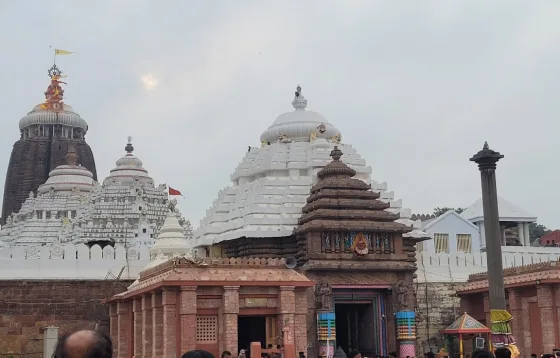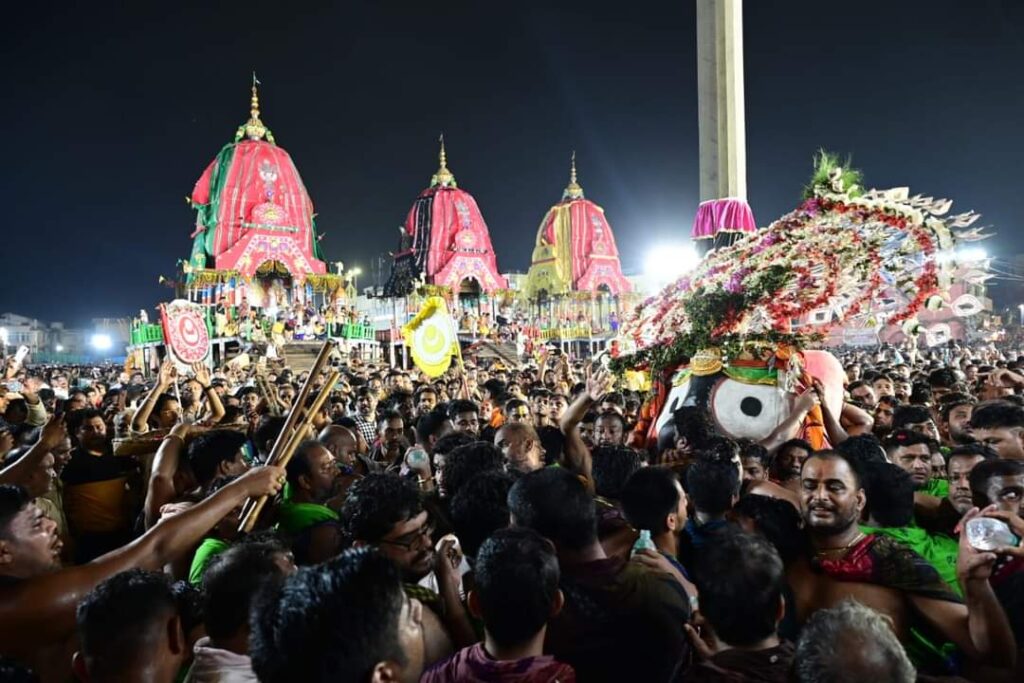
According to Drik Panchang, the revered Ratha Yatra of the four deities will be celebrated on Friday, July 16, 2026, in Puri, Odisha. This grand annual festival, marked by deep devotion and spiritual fervor, takes place on the Dwitiya Tithi (second lunar day) of Shukla Paksha in the month of Ashadha, as per the traditional Hindu calendar.
Tithi Timings:
- Dwitiya Tithi Begins: 1:24 PM on July 26
- Dwitiya Tithi Ends: 11:19 AM on July 27
According to the Skanda Purana, among the twelve Yatras of Shree Jagannatha, the Ratha Yatra or Shree Gundicha Yatra is regarded as the most significant and renowned festival.

The Bamadev Samhita states that those who witness the four deities seated on the Simhasana (sacred throne) of Gundicha Temple for a week, along with their ancestors, attain a place in the eternal heavenly abode of Baikuntha. Furthermore, merely hearing about this grand festival grants spiritual merit, and those who study its sacred rituals and spread awareness of them are also assured a place in the Lord’s divine realm.
The Ratha Yatra of the four deities takes place on the second day of the bright fortnight of Ashadha, dedicated to the well-being of humanity. The Skanda Purana describes this festival as the most important among all celebrations of Mahaprabhu. During this occasion, Shree Hari, the Supreme Lord of the cosmos, joyfully rides His chariot to Gundicha Temple to fulfill His divine promise.
The chariot symbolizes Sandhini Shakti, and even a mere touch of it is believed to bestow the boundless compassion of Lord Shree Jagannatha upon His devotees. Well-known verse in this context declares:
“Ratha tu Vamanam drustva purnarjanma na vidyate.”
(“One who beholds the divine chariot of Lord Vishnu is freed from the cycle of rebirth.”)
Date and Duration of Puri Rath Yatra 2026
Jagannath Rath Yatra 2026 will begin on July 16, 2026, and conclude on July 25, 2026. Festival spans over nine days, during which various important rituals take place, culminating in the return journey of the deities to the Jagannath Temple.
Rituals and Dates of Puri Rath Yatra 2026
- Snana Purnima – June 11, 2026
- Anavasara – June 12 – 25, 2026
- Gundicha Marjana – June 26, 2026
- Rath Yatra – June 27, 2026
- Hera Panchami – July 1, 2026
- Sandhya Darshan – (July 4, 2026)
- Bahuda Yatra – July 5, 2026
- Suna Besha – July 6, 2026
- Adhara Pana – July 7, 2026
- Niladri Bijay – July 8, 2026
Ratha Yatra
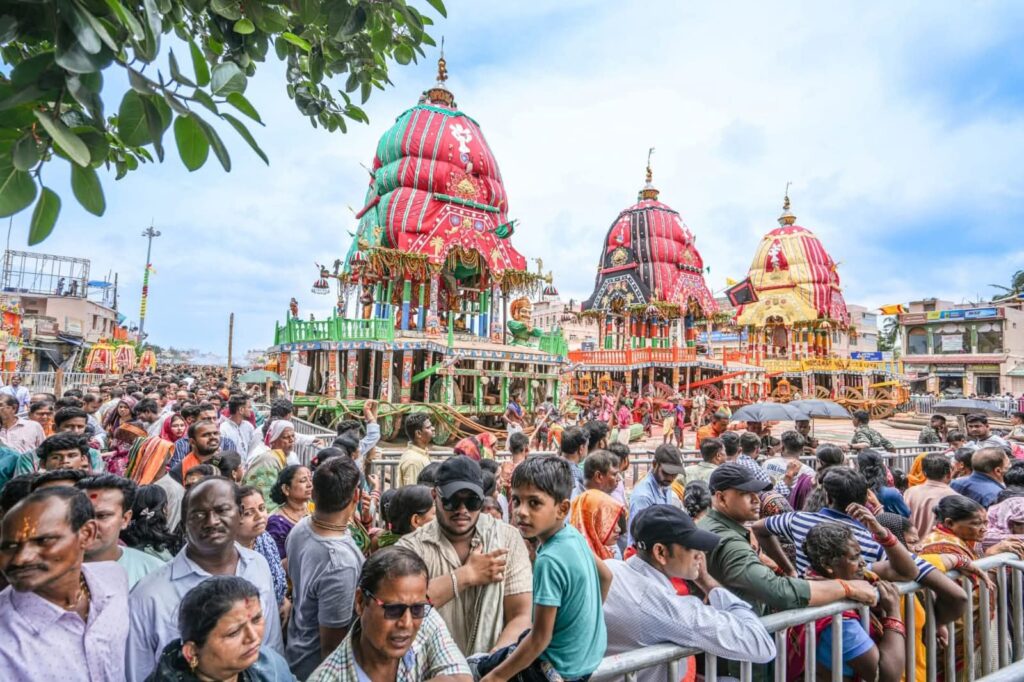
Ratha Yatra, also known as the Chariot festival, falls either in June or in July each year. This festival attracts foreigners as well since it is globally acclaimed. Primarily, the festival of Ratha Yatra denotes equivalence and integration. It is a good opportunity for people to witness the divine being. Three divinities are worshipped on the festival day. They include Lord Balabhadra, who is the elder brother of Lord Jagannath; Subhadra, who is the sister of Lord Jagannath and Lord Balabhadra; and Lord Jagannath.
Customized Tour Packages at Special Prices!
Explore amazing places with customized itineraries just for you. Perfect for families, couples, or solo travelers – book your dream getaway today and save big!
Limited-Time Deal – Don’t Miss Out!


Chariots of Puri Rath Yatra 2026
Three Sacred Chariots of Puri Rath Yatra 2026
Every year, during the grand celebration of Puri Rath Yatra, three majestic chariots are specially crafted for the deities Lord Jagannath, Lord Balabhadra, and Goddess Subhadra. These sacred rathas are reconstructed anew using traditional methods, passed down through generations.
The wood used in the construction is sourced from specific trees like Dhausa and Phassi, carefully chosen and brought from the Dasapalla forests of Odisha. Specialized group of hereditary carpenters, with exclusive rights, lead the process of building these divine chariots.
Below is a detailed overview of the three iconic chariots featured in Jagannath Rath Yatra 2025:
Details of the Chariots
| Feature | Nandighosha | Taladhwaja | Darpadalana |
| Principal Deity | Lord Jagannath | Lord Balabhadra | Goddess Subhadra |
| Number of Wheels | 16 | 14 | 12 |
| Height | Approx. 45 feet | Approx. 44 feet | Approx. 43 feet |
| Canopy Color | Red and Yellow | Red and Green | Red and Black |
| Charioteer | Daruka | Matali | Arjuna |
| Guardian Deity | Garuda | Vasudeva | Jayadurga |
Why do People Celebrate Ratha Yatra?
Ratha Yatra is organised in Puri, which is a prime city in Odisha. Devotees entrust that Lord Krishna or Lord Jagannath desires to visit Mathura, which is his birthplace. They organise this festival in order to fulfil his desire yearly. Devotees also believe that they are freed from the phase of birth and death if they take devotedly take part in this festival. Muslims also celebrate the festival.
How is Rath Yatra Festival Celebrated?
Devotees carry the idols of Lord Krishna, Lord Balabhadra and Subhadra to Gundicha Temple from Jagannath Temple. Idols are then positioned in chariots. Priests perform Snana Purnima, which is a custom wherein three idols are bathed with water (109 buckets). The bathed idols will be placed in isolation until the procession day. This event is called Ansara. Odisha’s royal successor performs the ceremonial of Chera Pahara. King carries the divinities and positions them on chariots during the event of Chera Pahara.
Rituals of Shree Gundicha Yatra
After the completion of morning rituals of the deities such as Mangal Alati, Abakash, Ballabha, Khechedi bhog etc on the 2nd day of Ashadha Sukla tithi the “Mangalarpana ritual” is performed. The four deities come in a pahandi (ceremonial procession) and board the sacred chariots one after the other. The deities namely Lord Sudarsana, Lord Balabhadra, Devi Subhadra and Lord Shree Jagannatha come serially in pahandi and board their chariots. After the Pahandi the proxy divinities (beje pratimas) such as Rama and Krushna are placed by the Mahajana servitors on the chariots i.e ‘Taladhwaja’ and Madanamohan on the ‘Nandighosha’ chariot respectively.
Chhera Panhara Ritual
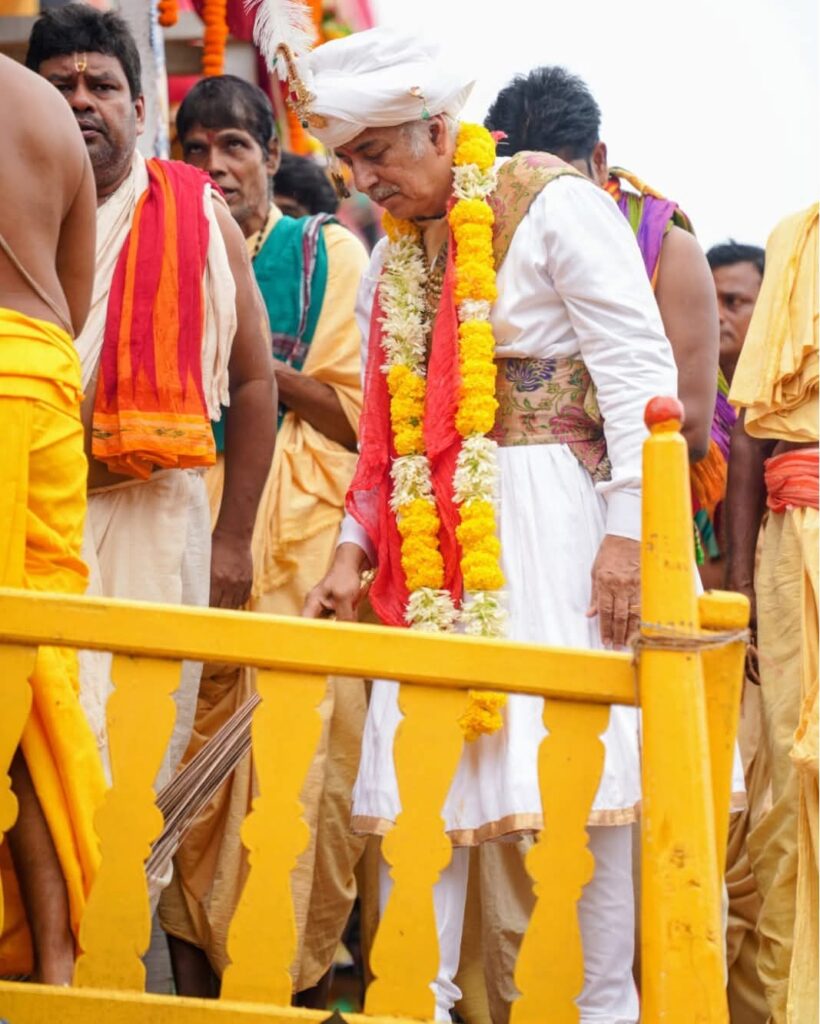
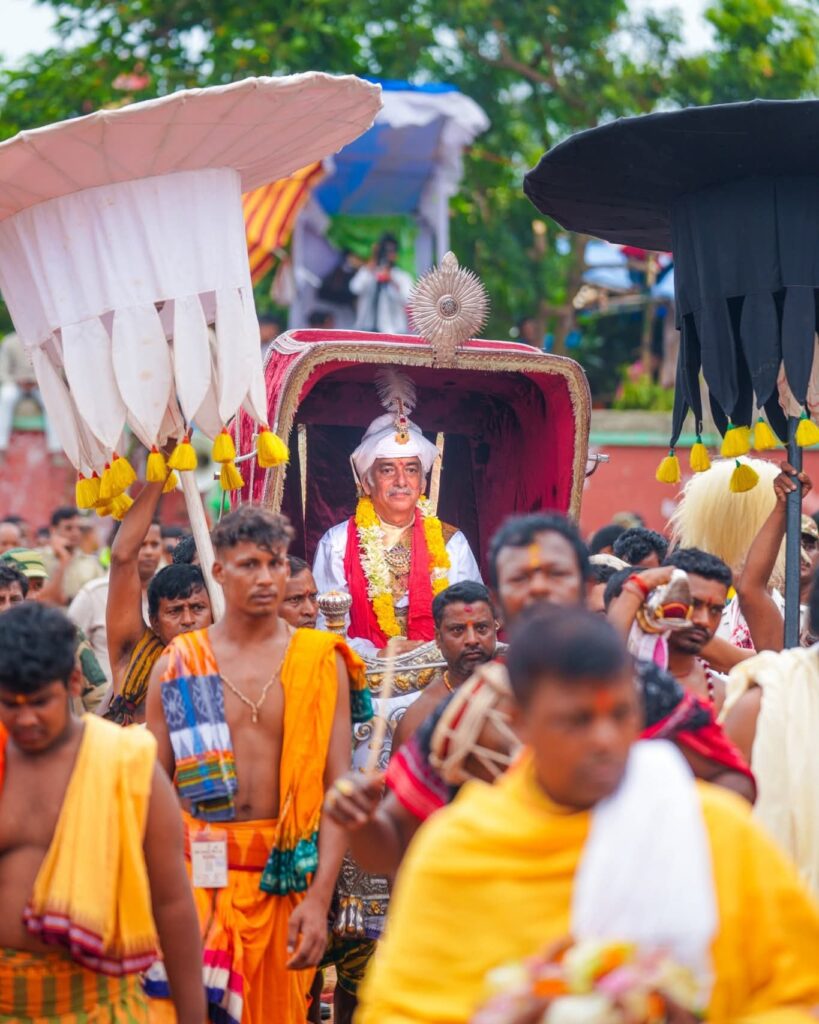
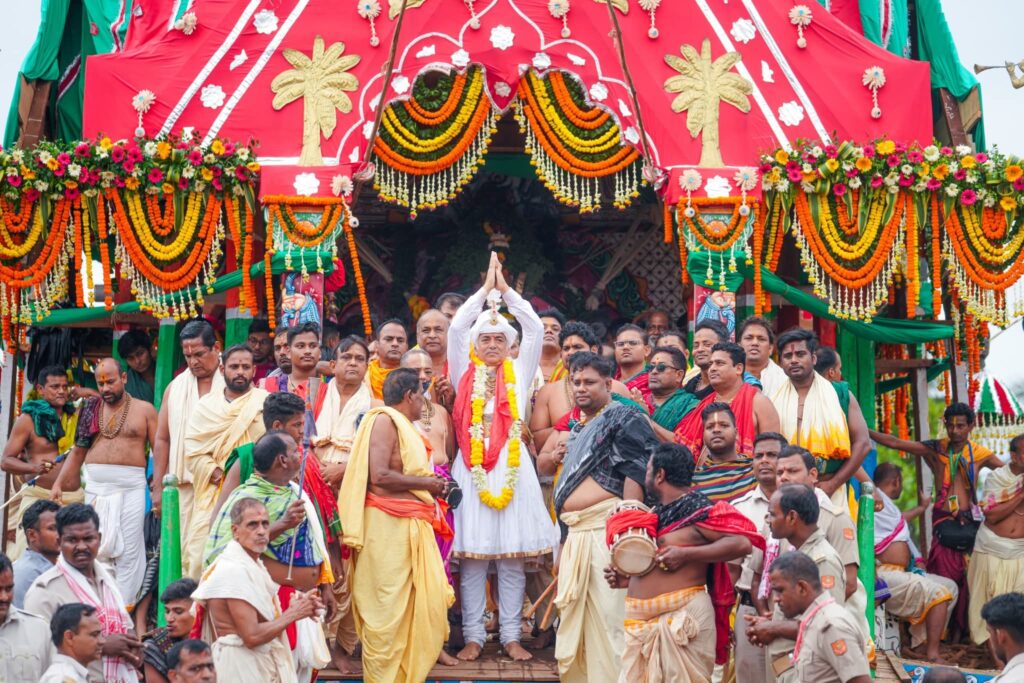
After boarding of the deities in their respective chariots the deities are decorated with ‘malachula’ and Besha on the chariot. The Chhera Pamhara (moping the chariots in a golden broom) ritual is performed by the Gajapati Maharaja is brought in a ceremonial procession by a Tamjan (palanquin) from the Shreenahara (king’s palace). Gajapati offers camphor lamp in a golden diya (lamp) to the deities. This is followed by alata and chamara ritual. The king sweeps the floor of chariot by a golden broom and thereafter sprays sandal paste on the chariot.
Pulling of Chariots
As per tradition, after the chhera pamhara the Bhoi sevakas remove the Charmala from the chariots. Each chariot is tied with four wooden idols of horses. The kahalia servitor blows kahali (trumpet). This is followed by beating of gongs. Thereafter the chariots are pulled. Ratha Dahuk (the jester-like minstrel) sings many songs to enthuse the crowd to pull the chariot enthusiastically. The chariots are pulled towards the Shree Gundicha Temple. Which is situated at a distance of three kms. Thereafter the deities such as Lord Sudarsana, Lord Balabhadra, Devi Subhadra and Lord Shree Jagannatha are taken serially by Daitapatis in Pahandi to the Simhasana inside Gundicha Temple. All rituals similar to that of Shreemandira are performed in the Shree Gundicha Temple during the seven days stay of the deities in the said temple.
Hera Panchami
Hera Panchami is an important festive occasion during the Shree Gundicha Yatra. On the 6th day of Asadha Sukla (full moon phase) Hera Panchami is celebrated.
Sandhya Darshan
As described in the puranas getting a glimpse of the four deities on the Adapa Mandap during the evening (Sandhya Darshana) brings incessant bliss to a devotee. As described in ‘Niladri Mahodaya’ seeing the deities continuously for 10 years in Nilachala (Shreemandira) in equivalent to witness the deities for one day only at Adapa Mandapa at Gundicha Temple Especially, if one sees the deities during evening / night hours gets ten times more than the desired results. The Sandhya Darshana ritual is performed on the day before Bahuda Yatra (Return car festival) since ancient days.
Bahuda Yatra
The return car festival or Bahuda Yatra is known as “Dakshinabhimukhi Yatra” (movement of chariot towards south). On Ashadha Sukla Dasami, the Bahuda Yatra is celebrated with certain rituals such as Senapatalagi, Mangalarpana, and Bandapana etc. When the three chariots are on their way back to Shreemandira, a special type of cake (Poda Pitha) is offered to the deities at Mausimaa Mandir. Thereafter the chariots of Balabhadra and Subhadra proceed further and are stationed in front of Singhadwara. But the chariot of Nandighosha of Lord Shree Jagannatha halts at Shreenahara. Goddess Lakshmi is carried in a palanquin to Shreenahara and Dahipati ritual and ‘Laxmi Narayan Bheta’ nities are performed there.
Getting a glimpse of the deities on the south ward journey during Bahuda gives incessant bliss and removes all sins and afflictions.
Suna Besha
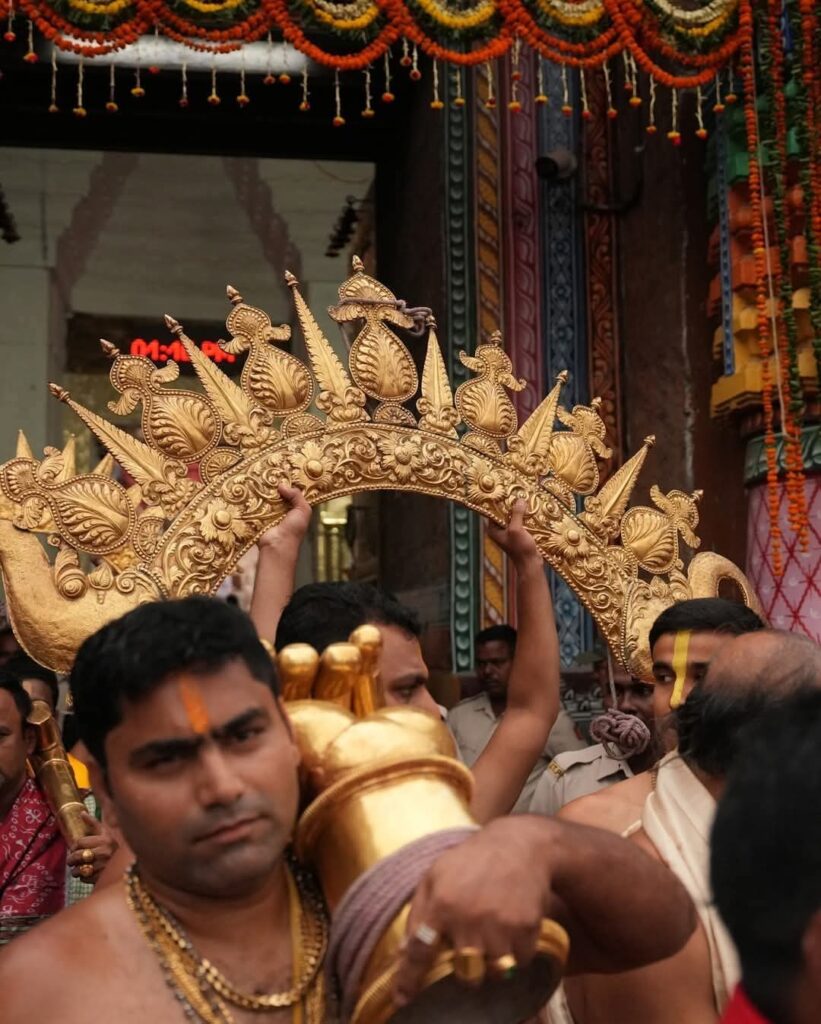
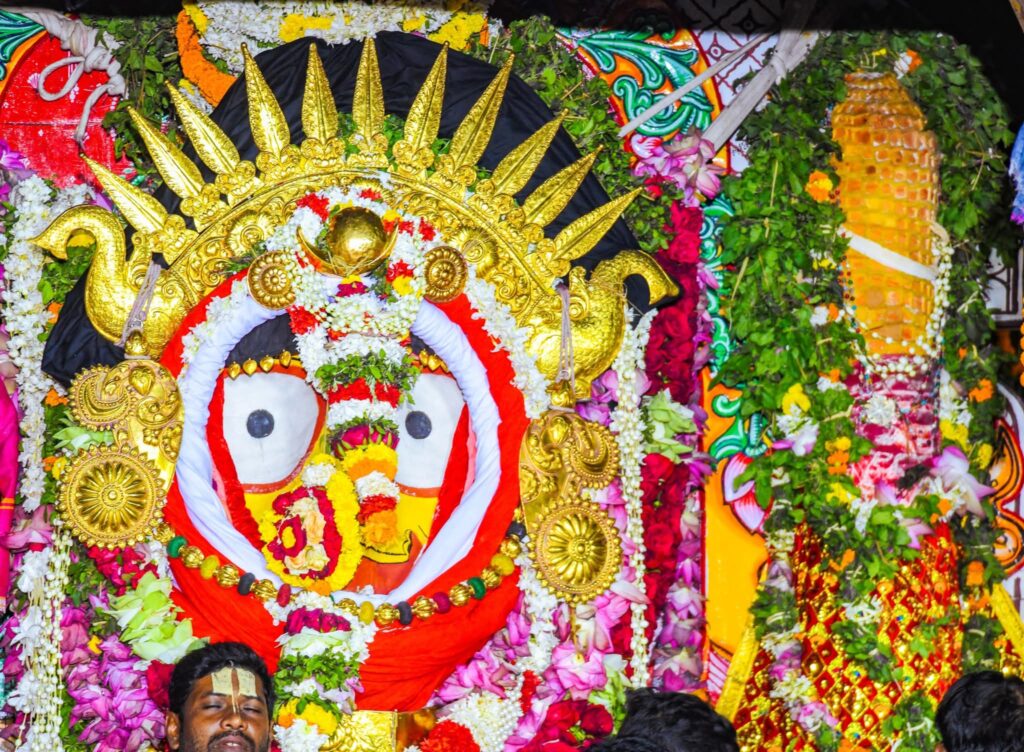
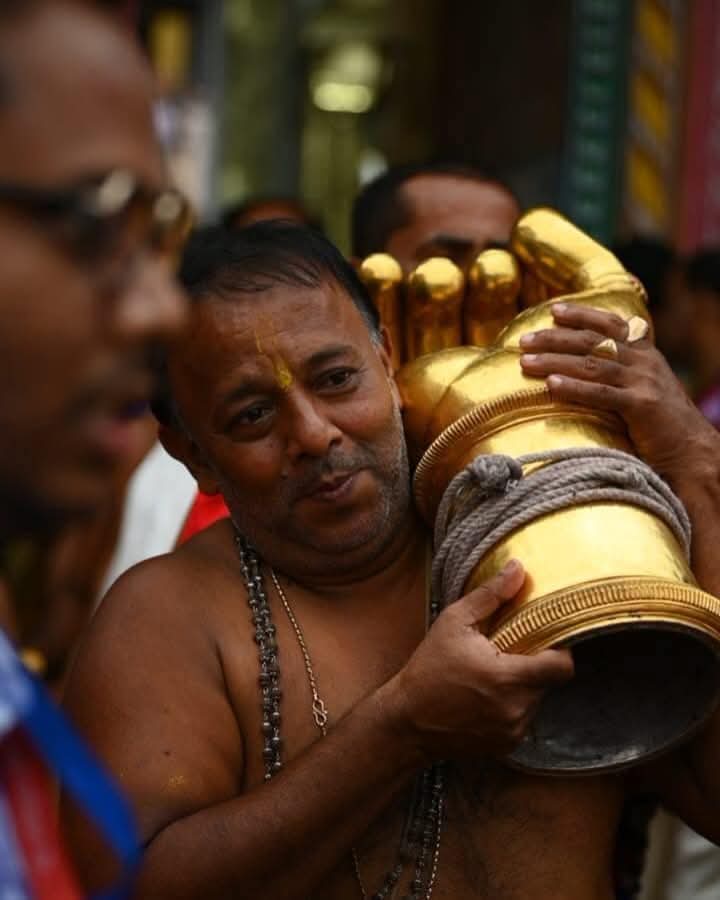
During the last phase of the Gundicha Yatra the deities are adorned with gold ornaments on the chariots in front of the Lions Gate on the Sukla Ekadasi tithe and the devotee’s witness the ‘Suna Besha’ of the deities.
Adhara Pana
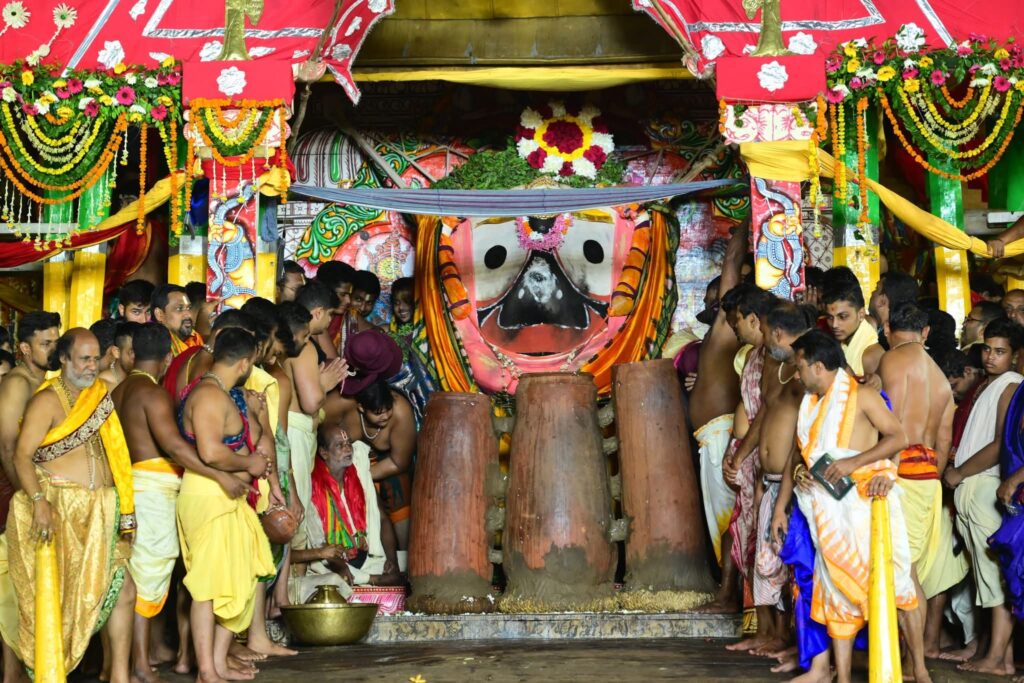
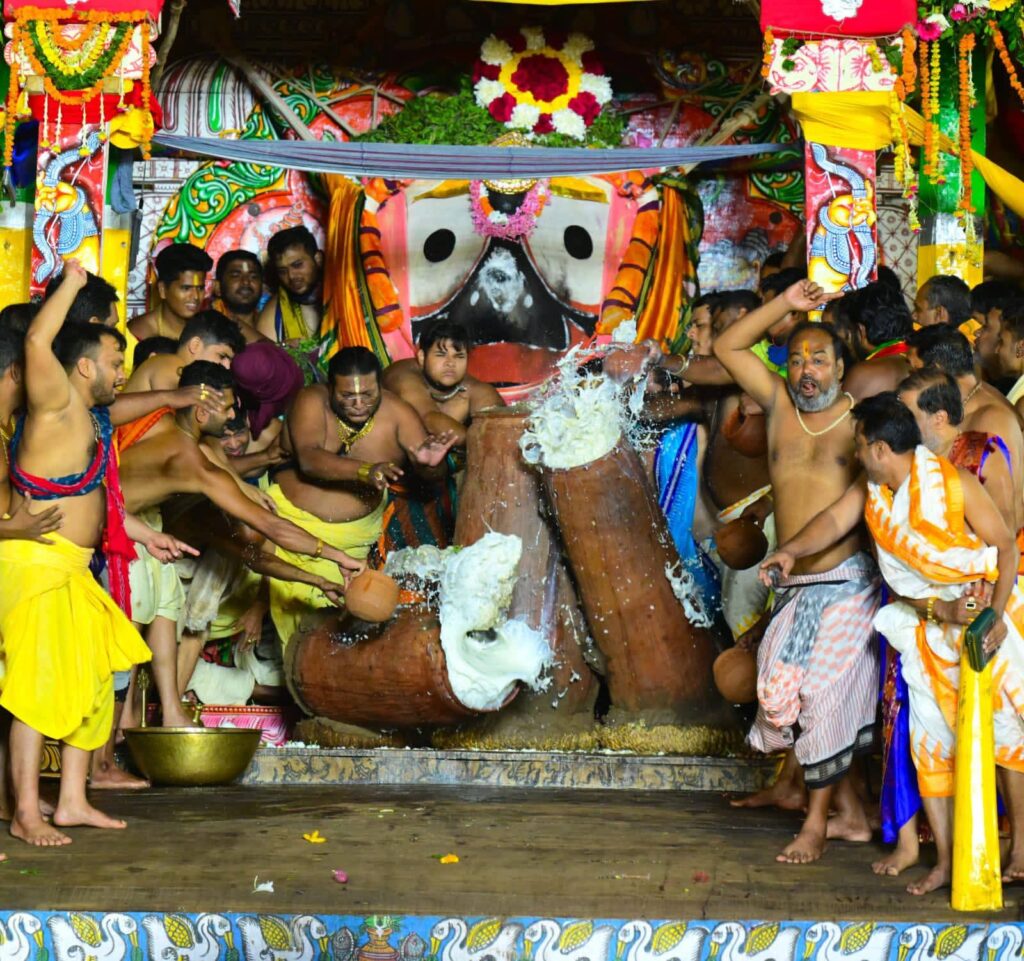
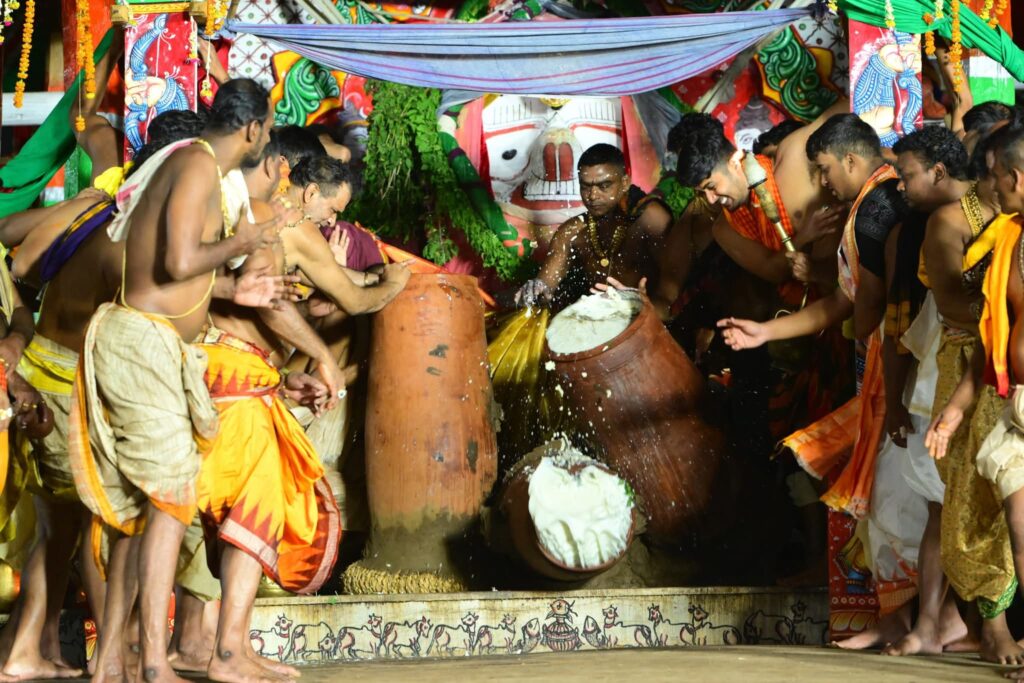
On Ashadha Sukla Dwadashi (12th day of bright moon phase) Adhara Pana (a special type of sweet drink in which cheese, milk, sugar, spices are mixed) is offered to the deities on the chariots.
Niladri Bije
Niladri Bije is a special event i.e. the last phase of Shree Gundicha Yatra. The four deities return to the bejeweled platform in a ceremonial procession on the thirteenth day of the bright fortnight of Ashadha.
Shree Gundicha Yatra in Puri is considered one of world’s largest religious festival and which is being celebrated since time immemorial.
FAQs
What is Rath Yatra?
Rath Yatra is an annual chariot festival celebrated in Puri, Odisha, where Lord Jagannath, along with Balabhadra and Subhadra, is taken in grand processions on massive chariots from the Jagannath Temple to the Gundicha Temple.
When is Rath Yatra celebrated?
Rath Yatra is celebrated on the second day of the Hindu lunar month of Ashadha, which usually falls in June or July.
Where is the most famous Rath Yatra held?
The most famous Rath Yatra takes place in Puri, Odisha, at the Jagannath Temple. However, similar processions occur in other parts of India and abroad.
What is the significance of Rath Yatra?
Rath Yatra symbolizes Lord Jagannath’s annual visit to His aunt’s house (Gundicha Temple). It represents devotion, inclusivity, and spiritual renewal for devotees.
What are the names of the chariots used in Rath Yatra?
The three grand chariots are:
- Nandighosa (Lord Jagannath’s chariot)
- Taladhwaja (Balabhadra’s chariot)
- Darpadalana (Subhadra’s chariot)
How are the Rath Yatra chariots built?
The chariots are newly constructed each year using specific sacred wood from designated forests and crafted by skilled artisans following ancient traditions.
Who pulls the Rath Yatra chariots?
Devotees pull the chariots with thick ropes, believing that participating in this act cleanses sins and grants spiritual blessings.
What happens during the return journey of Rath Yatra?
The return journey is called Bahuda Yatra, where the deities return to the Jagannath Temple from the Gundicha Temple after staying there for nine days.
Is Rath Yatra only celebrated in Puri?
No, Rath Yatra is celebrated in many cities in India, including Ahmedabad, Kolkata, and Mumbai, as well as in countries with Hindu communities, such as the USA, UK, and Canada.
Can non-Hindus participate in Rath Yatra?
While non-Hindus are not allowed inside the Jagannath Temple, they can participate in Rath Yatra by pulling the chariots and witnessing the grand procession in Puri and other locations.