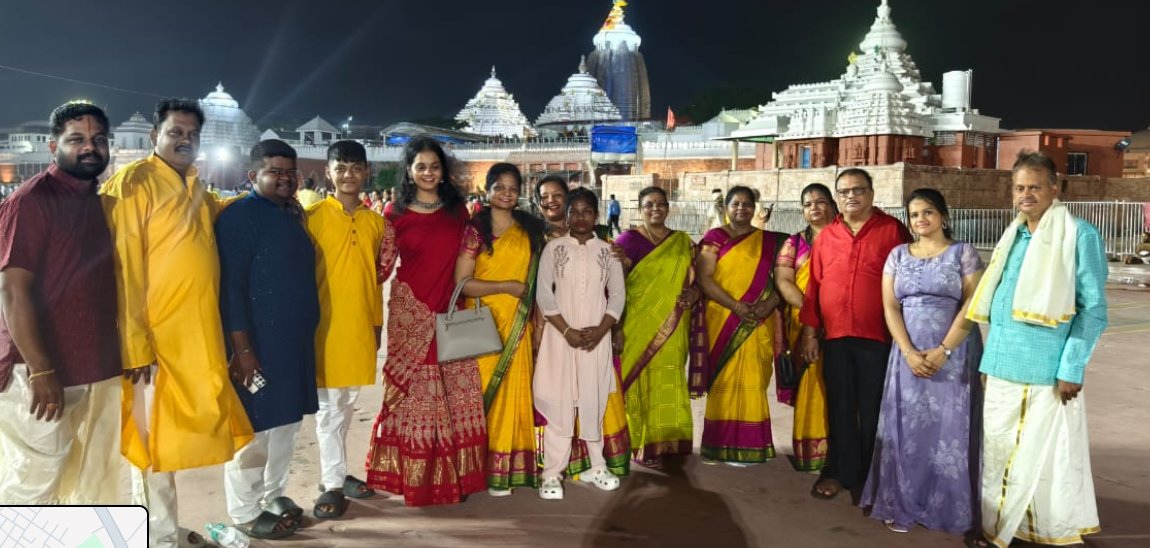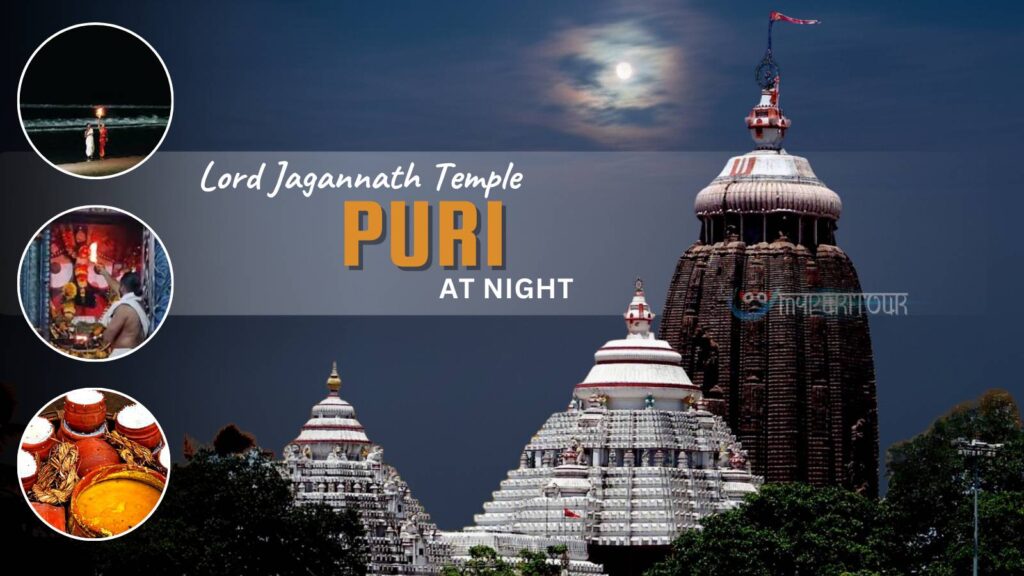
Puri Jagannath Temple at night transforms into a mystical, spiritual sanctuary, offering devotees and visitors an experience distinct from the daytime. From 8 PM to midnight, the temple conducts a series of meticulously performed rituals, collectively called Nitis, which are central to the temple’s daily religious calendar.
Jagannath Temple Timings – Darshan, Puja, and Ritual Schedule
These rituals, carried out by hereditary servitors, symbolize the transition from day to night and reflect the deep devotion and centuries-old traditions that the temple preserves. Witnessing these night rituals provides devotees a chance to experience the temple’s spiritual depth in a serene, contemplative environment.
Mystical Night of Puri Jagannath Temple
As the sun sets over the Bay of Bengal, the Jagannath Temple enters a phase of deep spiritual activity. Unlike the busy day-time darshans, night-time in the temple is calm, peaceful, and contemplative. The period from 8 PM to 12 AM is significant because it includes rituals that mark the preparation of the deities for rest, final offerings of food (Bhoga), and special ceremonial decorations.
These rituals not only highlight devotion but also preserve the temple’s sacred traditions. Devotees often describe night-time darshan as a more introspective and mystical experience, with the quiet chants, dimly lit lamps, and fragrant incense contributing to the sacred ambiance.
Evening Rituals Before 8 PM at Puri Jagannath Temple
Sandhya Arati (Evening Lamp Offering)
Around 6:00 PM, the temple performs the Sandhya Arati, the evening lamp offering ceremony. During this ritual, temple priests light multiple oil lamps and chant Vedic hymns and devotional songs, inviting the blessings of Lord Jagannath.
Devotees gather in the temple premises, offering prayers and participating in the chanting. The Sandhya Arati is not only a visual spectacle but also a deeply symbolic ritual representing the transition from day to night and the deity’s continued presence in devotees’ lives even after sunset.
Sandhya Dhupa (Evening Food Offering)
Between 6:30 PM and 8:00 PM, the Sandhya Dhupa or evening food offering is performed. Prepared with devotion in the temple kitchen, this offering includes rice, sweets, fruits, and special dishes unique to Jagannath Temple traditions.
The Dhupa represents gratitude and devotion, and it is believed that offering food to the deities before night ensures divine blessings for devotees’ wellbeing and prosperity. This ceremony also emphasizes the temple’s philosophy of sacred food as a medium of spiritual connection.
Main Night Rituals of Puri Jagannath Temple
Bada Sringar (Grand Night Decoration)
At 8:30 PM, the deities are adorned during the Bada Sringar, the grand night decoration ritual. During this process, Lord Jagannath, Lord Balabhadra, and Goddess Subhadra are dressed in fresh garments and decorated with garlands, jewelry, and face paintings.
This ritual signifies that the deities are being prepared to rest for the night while maintaining their divine dignity. Devotees witness this ceremony in reverent silence, appreciating the artistic and spiritual significance of the decorations.
Sayan Arati (Night Lamp Offering)
The Sayan Arati, performed around 9:00 PM, involves offering lamps and chanting hymns as a mark of respect before the deities are put to rest. The atmosphere becomes deeply spiritual, as soft light illuminates the sanctum and the air fills with the scent of incense.
This ritual symbolizes the farewell of the deities for the night, ensuring that devotees end their day with peace, reflection, and divine blessings.
Badasinghara Bhoga (Nighttime Food Offering)
At 10:30 PM, the Badasinghara Bhoga is offered. This is the last food offering of the day, consisting of rice, sweets, and other delicacies. Devotees consider it highly auspicious to partake in or observe this offering, as it is believed to bring spiritual merit and blessings from Lord Jagannath.
The ceremony is accompanied by Vedic chanting, reinforcing the sacredness of the offerings and emphasizing the temple’s philosophy of food as divine prasad.
Deities’ Nighttime Routine
Pahuda (Retirement for the Night)
At 11:30 PM, the deities undergo the Pahuda ritual, symbolically putting them to rest for the night. The sanctum sanctorum is closed, and the temple is kept quiet, marking the end of the day’s rituals.
This ritual is more than ceremonial; it represents Lord Jagannath entering a state of divine rest, ensuring spiritual continuity and protection over the temple. Devotees often remain in prayer or silent meditation during this time, experiencing the sacred stillness of the temple at night.
Temple Ambience & Spiritual Experience After Dark
The nighttime ambiance of Puri Jagannath Temple is serene and deeply reflective. Dimly lit interiors, flickering oil lamps, and soft chants create a meditative environment. The subtle fragrances of incense and flowers, combined with the sound of devotional music, offer devotees a profound spiritual experience.
Many devotees describe feeling a personal connection with the divine during these hours, making night darshan an intimate and transformative experience.
Night Darshan: Access & Guidelines
While the temple remains open to devotees at night, access is restricted to ensure the sanctity of rituals. Visitors can observe from designated areas, and entry into the sanctum is often limited.
Devotees are advised to arrive early (before 8 PM) to witness rituals like the Bada Sringar and Sayan Arati, and to adhere strictly to temple guidelines regarding behavior, attire, and conduct inside the premises.
Mahaprasad & Late-Night Food Offerings
The Mahaprasad, considered sacred food offered by Lord Jagannath, is distributed between 10:30 PM and 11:30 PM. Prepared in accordance with traditional rituals, Mahaprasad serves as a spiritual conduit for devotees, symbolizing purity, devotion, and divine blessing.
Consuming it is believed to purify the soul and bring divine grace. The distribution at night emphasizes the temple’s commitment to sharing sacred offerings even during late hours, accommodating the devotees who come specifically for night darshan.
Seasonal & Festival Night Rituals
During Rath Yatra, Snana Yatra, and other festivals, night rituals are performed with extra grandeur and devotion. The deities may be decorated in special festival attire, accompanied by extended Vedic chants, traditional music, and ceremonial processions.
These night-time celebrations attract thousands of devotees, creating a spiritually charged atmosphere, highlighting the cultural richness and religious fervor unique to Puri Jagannath Temple.
Unique Ceremonies Between 8 PM–12 AM
Apart from regular night rituals, unique ceremonies take place, such as the Chhera Pahanra, where the King of Puri symbolically sweeps the temple premises, demonstrating humility and devotion.
Other rituals may involve nighttime processions or devotional chants, reinforcing the idea that the deities’ presence is continuous and sacred, even after dark. These practices highlight the spiritual depth and ceremonial complexity of the temple.
Devotee Participation in Night Rituals
Devotees can actively witness the rituals by arriving before 8 PM. While certain ceremonies like Sayan Arati and Pahuda are restricted to priests, devotees can offer prayers, chant hymns, and observe the rituals. Maintaining quiet reverence and modest attire ensures a deeper spiritual connection.
Night darshan provides a personalized and introspective experience, often less crowded than day-time visits.
Photography & Observation Tips
Photography is generally prohibited inside the temple during night rituals to preserve sanctity. Devotees are encouraged to observe quietly, focusing on meditation and prayer. Keeping electronic devices away and respecting the sacred space ensures a fully immersive spiritual experience.
Security & Safety Measures at Night
The temple administration implements strict security measures at night, including police and temple security personnel. Visitors are expected to cooperate with guidelines, minimize personal belongings, and adhere to the conduct rules, ensuring the safety of devotees and sanctity of the rituals.
Mythological Stories & Legends Associated With Night Rituals
Night rituals are steeped in legends. One popular belief is that Lord Jagannath visits devotees in their dreams while in divine rest, providing guidance and blessings. Another story describes how nighttime Bhoga offerings maintain cosmic balance, reflecting the divine principle that God’s care extends beyond daylight hours. These legends enhance the spiritual meaning of night-time darshan.
Nearby Night Attractions Around Puri Temple
After night darshan, devotees can explore attractions like Puri Beach, Loknath Temple, and Swargadei Temple. Evening cultural performances, local markets, and lighted streets provide a peaceful environment for reflection, along with opportunities to experience Puri’s coastal charm.
Night-time darshan is a unique opportunity to witness devotion, spirituality, and cultural heritage in a serene and contemplative environment, leaving devotees with a lasting sense of peace and divine grace.
FAQs
1. What time do night rituals start at Puri Jagannath Temple?
The night rituals begin around 8:00 PM, starting with the Bada Sringar and continuing with the Sayan Arati and Badasinghara Bhoga.
2. Can devotees witness the Sandhya Arati at night?
Yes, devotees can observe the Sandhya Arati, which occurs before 8 PM, and experience the lighting of lamps and chanting of hymns.
3. When do the deities retire for the night?
The deities undergo Pahuda, or night retirement, at around 11:30 PM, marking the end of the day’s rituals.
4. Is night-time darshan different from daytime darshan?
Yes, night darshan offers a quieter, more serene environment, with fewer crowds and a deeply spiritual ambiance.
5. Can non-Hindus enter the temple at night?
Yes, non-Hindus can enter during night rituals, but they must follow temple rules and maintain reverence.
6. When is Mahaprasad distributed at night?
The temple distributes Mahaprasad between 10:30 PM and 11:30 PM, after the final Bhoga offerings to the deities.
7. Are cameras and photography allowed during night rituals?
No, the temple prohibits photography inside the sanctum at night to preserve the sanctity of rituals.
8. How long do the night rituals last?
The main night rituals last from 8 PM to midnight, including decoration, lamp offerings, food offerings, and retirement of the deities.
9. What special rituals happen at night during festivals?
During festivals like Rath Yatra, the temple performs extended night rituals, including ceremonial processions, special prayers, and elaborate deity decorations.
10. How should devotees prepare for night darshan?
Devotees should arrive before 8 PM, wear modest attire, maintain silence, and follow temple guidelines to fully experience the spiritual ambiance.